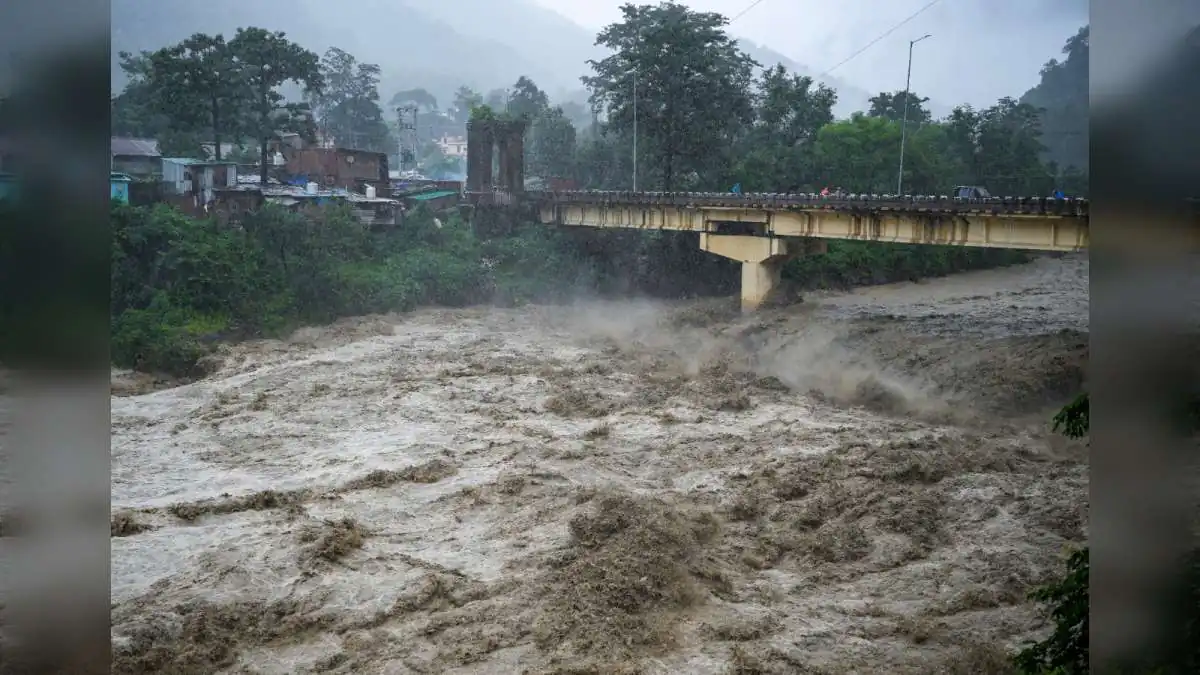
Uttarakhand is navigating one of its most challenging weather stretches of the season. Torrential downpours across the state have caused rivers and streams to overflow, disrupted normal life across multiple districts, and triggered landslide warnings across the mountainous terrain. Combined with an India Meteorological Department (IMD) forecast of very heavy rainfall accompanied by thunderstorms and lightning across several districts in the coming days, the state is entering a period of heightened vigilance and coordinated administrative response.
For residents, administrators, weather agencies and travellers alike, the coming days will demand exactly the kind of alertness, caution and cooperation that Himalayan weather emergencies always require.
The IMD Warning
The India Meteorological Department has issued a forecast of very heavy rainfall on Wednesday, accompanied by thunderstorms and lightning in several districts of Uttarakhand — with intense weather activity expected to continue over the next few days.
Given the state's mountainous terrain, intense rainfall carries multiple compounding risks. Landslides in vulnerable hillsides. Falling debris blocking key routes. Waterlogging in urban and rural areas. Disruptions on critical roads. Each of these risks becomes more acute as rainfall intensifies and continues over extended periods.
The IMD's advisory to remain alert and cautious is exactly the kind of early guidance residents across affected districts need to take seriously.
Rivers Rising Across the State
Multiple rivers across Uttarakhand are already flowing in spate as a direct result of the ongoing rainfall.
The Bin River in Rishikesh was already flowing in spate. The Gaula River in Haldwani has witnessed a significant rise in water level. Haldwani recorded 192 mm of rainfall in the 24 hours ending Tuesday — a genuinely intense volume that underscores just how severe the current downpour has been.
Meanwhile, in Chamoli district, the Alaknanda and Pindar rivers are flowing in spate following the persistent rainfall. Both are important rivers in the Uttarakhand river system, and their rising water levels have triggered serious concern among residents living along their banks.
The Shipra River at Kainchi Dham
One of the most visually striking transformations from the rainfall has been the Shipra River near the revered Kainchi Dham temple.
The Shipra, which usually flows calmly outside the temple, took on a completely different and fierce appearance on Tuesday after continuous rainfall. The sight of the river overflowing with a massive volume of water was difficult to associate with its normally peaceful flow.
The Shipra River originates in Bhawali and joins the Kosi River at Garampani Khairna. Continuous rain since Monday night caused the river to swell considerably and overflow. Despite the heavy rainfall, the number of devotees at Kainchi Dham remained low on Tuesday, leaving the area in front of the temple relatively empty.
Reassuringly, the temple's protective wall and the pillars supporting the bridge remained intact despite the strong flow of water. No damage to the temple was reported. Religious activities and worship at the temple continued as usual — a small but meaningful indication that even amid weather challenges, the essential functioning of the sacred site has been preserved.
The Flooding in Nainital's Alchauna
In Nainital district, water from the Kakariya drain, which flows behind Pandeychhod village in Alchauna, began entering residential areas — creating significant difficulties for local residents.
By afternoon, the flow from the drain had intensified significantly, with water entering nearly two dozen houses. The administration, along with local villagers, launched immediate efforts to evacuate the affected residents and move their belongings and valuables to safer locations.
As the stormwater continued to rise, several houses became increasingly vulnerable — forcing residents to move their possessions out of the affected areas. The affected families are reported to have suffered considerable losses due to the flooding.
Following the situation, the administration issued formal notices to 23 families residing in the area, asking them to vacate their houses and move to safer locations. That kind of decisive administrative action is exactly what such situations require — prioritising resident safety over the emotional difficulty of temporary displacement.
The Situation in Chamoli
Continuous rainfall has also disrupted normal life in Chamoli district. Roads have been blocked at several locations, complicating both everyday movement and emergency response coordination.
The rising water level of the Pindar River in particular has triggered concern and panic among people living close to its banks. Visuals from the Karnaprayag area show the river's swollen waters and powerful waves reaching dangerously close to residential buildings, hotels and other structures located along the riverbank.
With the river continuing to rise, anxiety among residents has understandably increased. The administration has been making repeated appeals to people living along the riverbanks to remain alert, exercise caution and move to safer locations whenever necessary.
Safety Advisories in Effect
Officials have warned that continued rainfall could cause river and stream levels to rise rapidly. Residents have been advised to avoid going near swollen rivers, streams and other water bodies.
The administration is closely monitoring the situation in vulnerable areas and urging people to follow safety advisories. Residents have also been asked to avoid vulnerable locations and remain alert to the possibility of landslides, flooding and other rain-related emergencies.
For anyone currently in Uttarakhand — whether resident or visitor — the message is clear. Follow official advisories. Stay away from swollen rivers. Avoid vulnerable hillsides. Cooperate with evacuation notices where they have been issued. And prioritise safety above all other considerations.
Why It Matters
Uttarakhand's Himalayan geography makes it uniquely vulnerable during intense monsoon spells. Steep terrain. Fragile hillsides. Fast-flowing rivers with limited flood buffers. Communities living close to riverbanks. Roads that traverse landslide-prone zones. Each of these factors combines to make monsoon weather events in the state more consequential than they would be in less mountainous regions.
When multiple rivers rise simultaneously, when landslide risks increase across vulnerable areas, and when homes begin flooding in specific villages, the situation requires coordinated response across weather agencies, district administrations, disaster management authorities, local communities and residents themselves.
Uttarakhand has, over recent years, built up meaningful institutional capacity for exactly such situations. The current spell will test that capacity, and hopefully validate the strength of the systems that have been developed.
Community and Administrative Response
The response by administration officials and villagers in Alchauna — coming together to evacuate affected residents and protect their belongings — reflects exactly the kind of community-administration cooperation that emergency situations demand.
Similarly, the issuing of formal vacate notices to 23 vulnerable families shows administrative willingness to take proactive, if difficult, decisions in the interest of resident safety.
For affected families across the state, the coming days will bring genuine hardship. Temporary displacement. Loss of belongings. Emotional stress. Uncertainty about when they can return home. Each of these challenges is real, and each will require sustained community, administrative and civil society support to navigate.
The Broader Environmental Context
The current weather situation in Uttarakhand fits into a broader pattern that environmental scientists across the Himalayan region have been increasingly concerned about. Rising instances of cloudbursts. Unpredictable rainfall patterns. Sudden intensification of river flows. Increased frequency of landslides.
While climate change is often cited as a major contributing factor to these evolving patterns, ecologists also point to more localised concerns — including deforestation, unregulated construction in ecologically sensitive zones and inadequate drainage infrastructure in growing towns.
Addressing these long-term structural vulnerabilities will require sustained commitment across policy, planning, community awareness and environmental restoration — well beyond the immediate response to any individual weather event.
Cultural and Community Impact
For Uttarakhand — one of India's most spiritually significant states, home to countless sacred rivers, temples and pilgrimage sites — heavy monsoon disruptions carry additional cultural weight. The Kainchi Dham situation, where devotees stayed away from the temple due to the rainfall, is a small but poignant example.
For visitors and pilgrims who traditionally travel through Uttarakhand during this period of the year, the current weather conditions are a reminder to plan travel carefully, follow official advisories, and prioritise safety over rigid adherence to travel schedules.
Institutional Response
For Uttarakhand's state disaster management authorities, district administrations, weather monitoring agencies and emergency response teams, the coming days will require sustained coordinated action. Real-time monitoring of river water levels. Rapid response to any landslide incidents. Proactive evacuation of vulnerable populations. Coordinated communication with residents through multiple channels. Efficient logistics support to affected communities.
All of these functions will be tested — and lessons from the current spell will help strengthen the state's disaster response systems going forward.
The Bigger Picture
Uttarakhand's current weather situation is a reminder that Himalayan states navigate a genuinely difficult monsoon reality every year. Their geography, ecology and community settlement patterns all combine to create heightened vulnerability during intense rainfall events.
What matters most in such moments is exactly what is already visible in Uttarakhand today. Weather agencies issuing timely advisories. District administrations taking proactive action. Local communities and administrators working together to protect vulnerable residents. Temple authorities and residents continuing their essential activities with care and caution. Media and communication systems keeping residents informed. And residents themselves listening to official guidance and prioritising safety.
For everyone connected to Uttarakhand — residents, families with loved ones in the state, visitors currently in the region, and anyone with concern for the state's people and places — the coming days call for continued attentiveness, respect for administrative guidance and support for the communities most affected.
For Uttarakhand's institutional systems, the coming days will require sustained coordinated action, clear communication and rapid response to any escalating situations. For the state's residents, the priority is caution, safety and cooperation with administrative advisories.
And for the broader national conversation about how India protects, plans for and invests in its Himalayan regions, the current situation once again underscores the urgency of thoughtful, sustained, well-resourced action across the entire spectrum of environmental care and disaster preparedness.
As the rainfall continues and rivers keep rising, the collective focus in Uttarakhand right now is on one shared priority — keeping people safe. And through the coordinated actions of authorities, communities and individuals across the state, the shared commitment to that priority is exactly what the coming days will require, sustained through every hour, every advisory, every evacuation and every act of quiet care that this weather emergency will call for before it finally begins to ease.











































.jpg.jpeg)