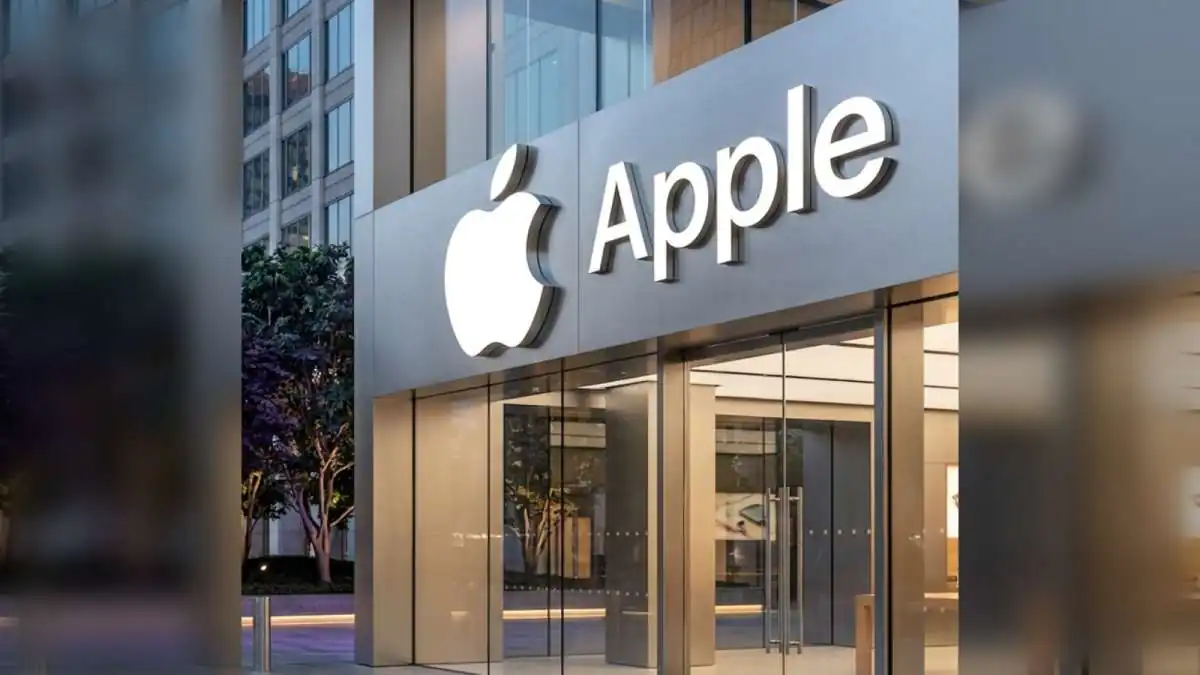
Apple Inc. has formally opened a new chapter in one of the most closely watched corporate leadership transitions in modern business history. According to multiple reports based on Apple's latest US Securities and Exchange Commission filing, new Chief Executive Officer John Ternus will receive a compensation package worth approximately $58 million in fiscal 2027. Outgoing CEO Tim Cook — who has now moved into the role of executive chairman after 15 years leading Apple — is set to receive approximately $47 million in his new role.
For the global tech industry, financial markets, Apple shareholders and millions of Apple product users, the transition marks the beginning of a new era for one of the world's most valuable and influential companies.
The Compensation Package Details
Apple disclosed the compensation details in a filing with the US Securities and Exchange Commission on Tuesday — the very first day of Ternus' tenure as CEO.
Ternus will receive an annual base salary of $3 million and a stock award with a target value of $55 million for fiscal 2027. Additionally, he will receive a prorated restricted stock unit (RSU) award worth about $2.5 million for fiscal 2026, which ends in September.
The structure of the equity component is particularly noteworthy. About 75 per cent of Ternus' equity award will be linked to Apple's performance relative to the S&P 500 — meaning a substantial majority of his stock compensation will depend on how well Apple performs against one of the most watched benchmark indices in global finance. The remaining 25 per cent will consist of time-based stock units that vest semiannually.
That's a compensation structure built around one clear principle — aligning the new CEO's economic outcomes directly with the long-term performance of the company relative to its market benchmark.
Tim Cook's New Role
For Tim Cook, the transition brings a significant but appropriate shift in both role and compensation.
Cook will see his annual salary fall to $2 million from $3 million as he moves into the executive chairman role. His fiscal 2027 stock award will have a target value of $45 million — with half of that equity award tied to Apple's performance relative to the S&P 500.
For context, Cook's total compensation as Apple CEO in fiscal 2025 was $74.3 million. The reduction in his compensation reflects the natural shift from CEO responsibilities to the more strategic, advisory nature of the executive chairman role.
Important Financial Context
The value of the stock awards for both executives will fluctuate with Apple's share price. Apple did not disclose in Tuesday's filing the potential cash bonuses for the executives, which are typically based on their salaries and performance.
That's an important nuance. Announced target values on stock awards represent theoretical compensation levels. Actual realised value will depend entirely on Apple's future share price movements and its performance relative to the S&P 500 over the vesting period.
The Cook Legacy
The scale of Tim Cook's contribution to Apple over 15 years is genuinely staggering — and provides critical context for understanding both the significance of this transition and the responsibility that Ternus now inherits.
Under Cook's leadership, Apple expanded into significant new product categories and grew its annual revenue to nearly $500 billion. The company's share price gained more than 2,200 per cent during Cook's tenure — a rise that transformed Apple from a highly successful company into arguably the most economically consequential technology enterprise in the world.
Cook took over from Steve Jobs in 2011, and during his 15 years at the helm, guided Apple through multiple product innovations, services expansions, sustainability initiatives, and unprecedented growth in scale and market value. His transition into the executive chairman role — where he will continue engaging with policymakers around the world and providing strategic guidance — allows Apple to retain the enormous benefit of his experience while opening the space for Ternus to shape the company's next chapter.
John Ternus: The New Leader
John Ternus, who officially took charge as CEO on Tuesday, previously served as Apple's senior vice president of hardware engineering — a role he had held since 2021.
Ternus is not a new arrival at Apple. He joined the company's product design team in 2001 and steadily climbed the ranks over the following two decades. He was appointed vice president of hardware engineering in 2013 and was subsequently promoted to the senior vice president role in 2021.
Over the years, Ternus has worked on some of Apple's most iconic products under Cook's leadership — including the Apple Watch, AirPods and Apple Vision Pro. That hands-on hardware engineering background gives him a deeply grounded, technically informed perspective on Apple's product ecosystem.
At 50 years old, Ternus is stepping into the CEO role at exactly the same age Cook did when he took charge in 2011 — potentially positioning him for a similarly long tenure at Apple's helm.
A Pivotal Moment for Apple
The transition to a new CEO comes at what industry observers have described as one of the most pivotal moments for Apple in years. The global technology industry is being reshaped rapidly by developments in artificial intelligence — and questions about Apple's own AI strategy have received significant public attention over recent quarters.
Ternus' technical background, particularly his deep experience in hardware engineering, is being widely viewed as a well-suited fit for the challenges Apple is currently navigating. He is expected to headline the company's next major product launch event — including the anticipated iPhone launch scheduled for September 9 at Apple's Cupertino headquarters.
The Market Response
Apple shares showed initial market approval of the transition, with the company's stock rising 2.2 per cent in midday trading on Tuesday as Ternus officially took over the role. That kind of measured, positive reaction reflects the confidence global investors are placing in the leadership transition process Apple has structured.
Under Cook's tenure, Apple's stock jumped 2,258 per cent — turning Apple into a company with a market capitalisation that at one point crossed $4.6 trillion. Sustaining and building on that legacy is now the challenge that sits firmly on Ternus' shoulders.
The Compensation Structure Analysis
Ternus' compensation structure is a genuinely thoughtful piece of executive compensation design. The dominant share of his equity award being tied to S&P 500 performance creates strong alignment between his personal economic outcomes and long-term shareholder value creation. The time-based vesting component provides some stability and predictability. And the significant base salary component reflects the seniority and complexity of the CEO role at a company of Apple's scale.
For corporate governance observers, the compensation structure reflects best-practice thinking about how modern executive compensation should be designed — with performance-linked components dominating the mix and clear alignment between executive rewards and shareholder returns.
Why It Matters
Apple is not just a company. It is one of the most influential enterprises in the world — with its products, services, values and strategic decisions shaping how billions of people around the world live, work and interact with technology.
When a company of Apple's scale transitions its CEO, the implications extend well beyond the company itself. Global technology strategy. Consumer product design trends. Supply chain dynamics. AI industry positioning. Sustainability agendas. Employee culture standards. All of these are influenced, in some meaningful way, by the decisions of Apple's CEO.
For consumers, investors, employees, partners and competitors alike, understanding what Apple's new leadership means for the coming years is one of the most consequential business questions of 2026.
Industry Impact
For the broader technology industry, Ternus' transition represents an interesting moment. His hardware engineering background may signal a renewed emphasis on Apple's product hardware innovation trajectory. That could have implications for how the company approaches new product categories, form factors and integration between hardware and services.
For Apple's supply chain partners, the transition brings continuity — Ternus is a longtime Apple veteran who understands the company's operations deeply. That kind of institutional continuity is valuable, particularly for a company that has built one of the most sophisticated global supply chains in modern business history.
For competitors, the transition adds a new variable to competitive strategy considerations. Cook's leadership style was distinctive and predictable. Ternus' will now need to be observed, understood and factored into competitive planning over the coming quarters.
Employee and Cultural Impact
For Apple's employees, the transition from Cook to Ternus is a genuinely significant moment. Cook was the CEO under whom most current Apple employees joined the company, and his tenure shaped Apple's modern culture in profound ways.
Ternus, as an internal candidate with 25 years at Apple, brings deep cultural continuity to the CEO role. Employees will be watching closely to see how his leadership style translates into internal cultural signals — from strategy communication to product priorities to organisational rhythm.
The AI Question
One of the most closely watched dimensions of Ternus' tenure will be how Apple positions itself in the rapidly evolving AI landscape. The company has been navigating important strategic decisions around AI capabilities — including a widely reported new-and-improved Siri experience powered by Google's Gemini, which is expected to roll out in the coming months.
How Ternus balances Apple's traditional strengths in privacy-focused, on-device intelligence with the demands of the current generative AI moment will likely define significant portions of his early tenure.
The Bigger Picture
Tuesday's leadership transition at Apple is more than just a personnel change. It is a moment of genuine historical significance for one of the world's most watched companies.
Tim Cook's 15 years at Apple's helm have been extraordinary by any measure. Growing annual revenue to nearly $500 billion. Expanding market capitalisation from $350 billion to over $4.6 trillion at its peak. Delivering shareholder returns of over 2,200 per cent. Introducing new product categories including the Apple Watch, AirPods and Apple Vision Pro. Building one of the most sophisticated global operations organisations in the technology industry.
His transition into the executive chairman role preserves his experience and continued engagement with policymakers globally — while opening space for John Ternus to shape Apple's next chapter with his own vision, priorities and leadership style.
For Ternus, stepping into the CEO role of one of the world's most consequential companies at age 50 represents both an enormous opportunity and an enormous responsibility. His $58 million compensation package for fiscal 2027 — the majority of which is tied directly to Apple's performance relative to the S&P 500 — creates strong alignment between his personal economic outcomes and long-term shareholder value creation.
For Apple's global community of shareholders, employees, customers, developers and partners, the coming months will be filled with critical moments that begin to shape the Ternus era. The September 9 iPhone launch. The evolution of Apple's AI capabilities. The strategic decisions around emerging product categories. The company's continued navigation of complex global geopolitics and supply chain considerations.
As Ternus formally settles into the CEO chair once occupied by Steve Jobs and then Tim Cook, one thing is unmistakably clear. Apple's next chapter has now officially begun. The stakes are enormous. The opportunities are significant. And the world is watching with the kind of intense attention that only Apple, among global technology companies, seems to consistently command.
For John Ternus, the compensation package announced Tuesday is more than just an economic commitment. It is a signal of the trust Apple's board is placing in his leadership. And for Apple as a company, the transition marks the beginning of what could well become one of the most consequential leadership eras in the history of modern technology.