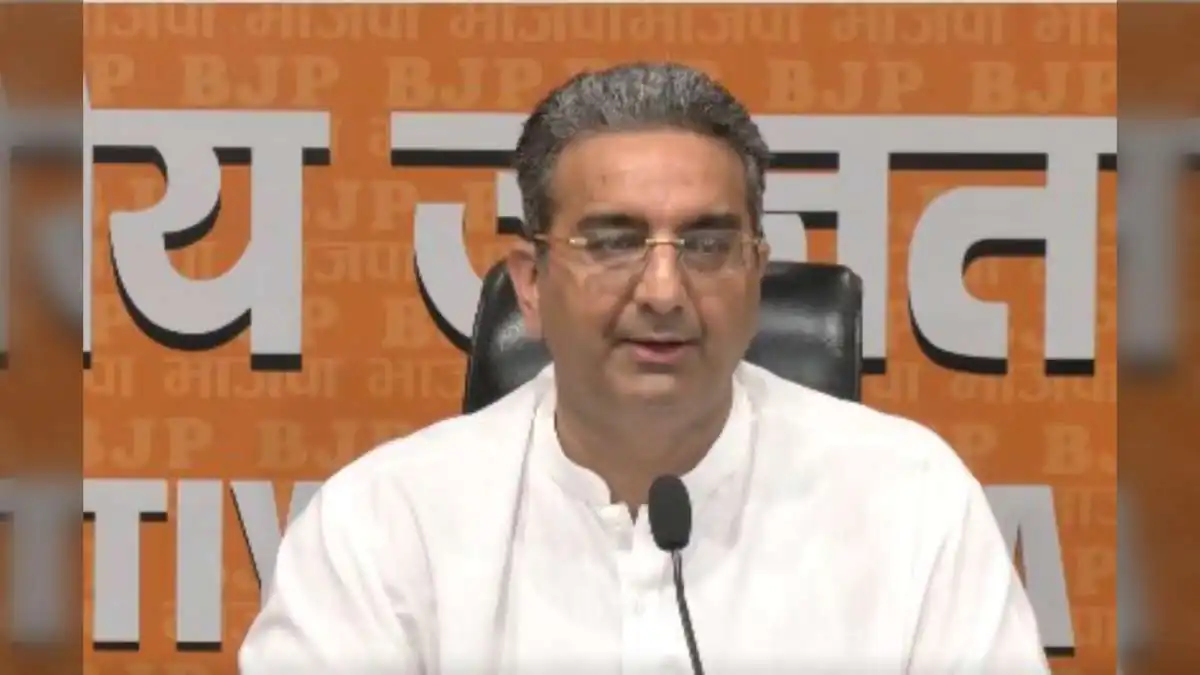
Punjab's political landscape saw a fresh escalation on Wednesday as the Bharatiya Janata Party (BJP) launched a scathing public attack on the Bhagwant Mann-led AAP government over an alleged "transfer racket" involving senior IAS and IPS officers in the state. Speaking at a press conference at the party headquarters in New Delhi, BJP national spokesperson Gaurav Bhatia claimed that top bureaucrats in Punjab were being transferred according to their "rate cards" — with middlemen and brokers allegedly deciding their transfers and postings. The allegations, based partly on a recent Enforcement Directorate (ED) filing in the Punjab and Haryana High Court, add a fresh political dimension to what has become one of the more closely watched governance controversies currently unfolding in the state.
For observers of Punjab's political trajectory, and for citizens tracking questions of administrative accountability in state governance, Wednesday's press conference marks another significant chapter in an ongoing public debate.
The Central Allegations
At the heart of the BJP's press conference sat a specific and serious set of allegations. The party claimed that middlemen and brokers were determining IAS and IPS transfers in Punjab, allegedly with the involvement of an Officer of Special Duty (OSD) in the Chief Minister's office.
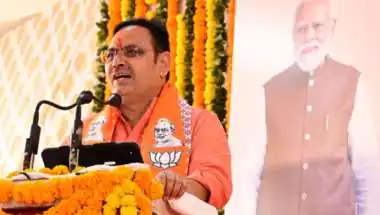
Addressing the press, Gaurav Bhatia laid out the party's position in direct terms.
"Punjab, known the world over for its honesty and hard work, has been turned into a brokerage and commission hub because of the corrupt and dishonest Bhagwant Mann government. The transfer and postings of IAS and IPS officers is being done as per their rate card, and it is being done on the directions of OSD," Bhatia claimed.
The BJP spokesperson further stated that middlemen had allegedly set up communication channels with the Chief Minister's office and were taking calls on officers' postings based on the alleged rate card.
The ED Filing Context
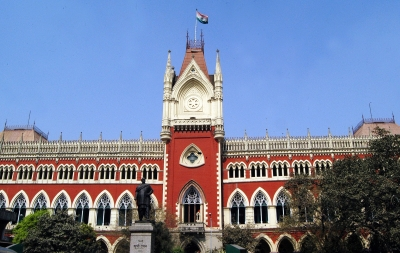
The BJP's scathing charges came on the back of a recent filing by the Enforcement Directorate (ED) in the Punjab and Haryana High Court. In that filing, the ED claimed that Rajbir Singh Gautam, an OSD in Chief Minister Mann's office, was allegedly leading a racket involving the transfer and posting of officers, including IAS and IPS officers.
The ED also presented a series of letters, reminders and other documents that it said had been sent to Punjab authorities regarding the alleged transfer-posting racket.
Referring to that ED submission, Bhatia said that the investigative agency had written seven letters to the Punjab Police — but that the state police had refused to lodge an FIR despite the alleged offence being a cognizable one.
"Today, people of Punjab are asking the Chief Minister — Are you not shielding the corrupt middlemen and undermining the Constitutional values that you are meant to uphold?" Bhatia asked.
The Political Framing
The BJP also drew broader political comparisons in its attack. Bhatia linked the current Punjab allegations to the Delhi liquor policy case that had significantly affected the AAP government in the national capital.
"A similar model existed under the previous AAP government in the capital and the people rightly punished the then dispensation for facilitating middlemen as well as corruption," he said.
Bhatia called AAP chief Arvind Kejriwal the "kingpin" of what he characterised as the transfer-posting scandal — placing the alleged Punjab issues within a broader BJP narrative about the AAP's approach to governance.
Bhatia further stated that the administration's alleged reluctance to lodge an FIR over the transfer-posting matter only raised suspicion about the Chief Minister's office. He said the time was not far when the AAP government in Punjab would be voted out by the people, much like the AAP government in Delhi had been.
The Demand From the BJP
The BJP's Wednesday press conference culminated in a set of specific demands directed at the Punjab government.
The party demanded that the Bhagwant Mann government come clean on the transfer-posting issue — or that the Chief Minister tender his resignation. Bhatia also questioned how an OSD could allegedly facilitate the transfer and posting of more than 20 senior bureaucrats without the knowledge of Chief Minister Bhagwant Mann — hinting at what the BJP characterised as a possible hand-in-glove arrangement.
He additionally alleged that "classified information pertaining to the state government has also flowed into the mobile phones of middlemen" — a particularly serious allegation touching on administrative confidentiality and information security.
The Broader Political Context
For anyone tracking Punjab politics, Wednesday's press conference forms part of a broader ongoing political engagement between the BJP and the state's AAP government. As with any active political controversy, both sides have their respective positions, framings and public communication strategies.
For citizens of Punjab, the allegations and the surrounding debate raise substantive questions about administrative accountability, the appropriate role of officials in the Chief Minister's office, the responsiveness of state police to central agency communications, and the general integrity of the bureaucratic transfer process — questions that go beyond partisan positioning.
Why It Matters
The transfer and posting of senior IAS and IPS officers is one of the most consequential administrative processes in any state government. These officers occupy positions of enormous public responsibility — leading district administrations, heading state departments, managing law and order and shaping policy implementation across sectors.
When questions arise about the integrity of the transfer-posting process, the concerns extend well beyond the individual officers involved. They touch on the fundamental question of whether administrative decisions are being made in the public interest — or in service of other interests.
For citizens of Punjab, the ongoing debate about the transfer-posting process is therefore genuinely important — not just as a political matter but as a governance and administrative accountability matter.
Institutional Dimensions
The BJP's press conference also touched on important institutional dimensions of the ongoing situation. The reference to seven letters allegedly sent by the ED to the Punjab Police, and the alleged non-registration of an FIR despite the offence being cognizable, raises questions about the relationship between central agencies and state law enforcement institutions.
The role of the Officer of Special Duty in the Chief Minister's office — a position that in most state governments is one of policy coordination and administrative facilitation rather than direct decision-making on senior bureaucratic transfers — has also come under specific scrutiny.
These institutional questions are exactly the kinds of governance issues that democratic accountability mechanisms are designed to address.
The Response Awaited
As of Wednesday's BJP press conference, the direct response of the Bhagwant Mann government or the AAP leadership to the specific allegations laid out was not part of the news event. In active political situations of this kind, responses from the accused parties typically follow through their own official channels over the coming days.
For a balanced understanding of the situation, citizens and observers will benefit from following the responses of all involved parties — the BJP, the AAP-led Punjab government, the concerned officials named in the ED filing, and any subsequent court proceedings — as the matter continues to unfold.
The Enforcement Directorate's Role
The Enforcement Directorate's engagement with the transfer-posting allegations places the matter squarely within India's institutional framework for investigating alleged financial and administrative wrongdoing. The specific ED filing in the Punjab and Haryana High Court will now progress through the judicial process — where questions of evidence, legal interpretation and appropriate remedies will be considered by the court.
For any allegation of this nature, judicial processes ultimately serve as the appropriate space for detailed factual and legal examination. Political discussions in the public domain, while important for democratic accountability, are distinct from the formal legal processes that will now unfold.
Cultural and Political Impact
For Punjab's political culture — historically marked by robust political debate and active civic engagement — the ongoing controversy adds to the state's continuing political conversation. Debates about administrative accountability, government transparency and the appropriate exercise of executive power are exactly the kind of civic conversations that healthy democracies engage in.
Whatever the eventual factual and legal outcomes of the current allegations, the broader public conversation about administrative integrity remains valuable in its own right.
The Bigger Picture
Wednesday's BJP press conference in New Delhi represents another chapter in the ongoing political engagement between the BJP and the AAP-led Punjab government. The specific allegations — that IAS and IPS transfers in Punjab are being done as per a "rate card", allegedly facilitated by an OSD in the CM's office — are serious ones, and are now situated within an active political debate as well as an ongoing legal and investigative process involving the Enforcement Directorate.
For citizens of Punjab, following the situation as it unfolds will offer important insights into how administrative accountability functions within the state's current governance framework. For India's broader democratic conversation, the case adds to the ongoing discussion about the appropriate boundaries between political leadership and bureaucratic administration.
As the ED's proceedings continue in the Punjab and Haryana High Court, as the political debate continues in the public domain, and as any further institutional responses unfold, the coming weeks will offer clearer visibility into how the various dimensions of the situation eventually get addressed.
For observers of the situation from all political perspectives, the priority — as with any active governance controversy — is to remain attentive to facts as they emerge, to allow due process to unfold through appropriate legal channels, and to maintain the kind of informed civic engagement that ultimately strengthens democratic accountability at every level.
For Punjab's citizens in particular, the ongoing conversation touches on questions of significant everyday relevance. Because whoever ends up being responsible for what — through legal proceedings, political debate or subsequent institutional action — the underlying substantive question about the integrity of administrative decision-making in the state remains genuinely important. And on that question, the coming weeks will help clarify exactly where things stand, how they got there, and what will need to happen going forward to ensure that Punjab's administrative processes fully reflect the values of transparency, accountability and public interest that citizens rightly expect from their state government.