For farmers, agri-businesses, exporters, policymakers and India's broader agricultural economy, the coming months carry meaningful commercial potential.
The Central Policy Shift
The ASSOCHAM report highlights an important policy change that has helped set the stage for the projected export opportunity. The government has shifted specified wheat varieties, wheat flour and related products from the "Prohibited" to the "Free" export category.
That shift will meaningfully expand market access for Indian producers and processors, while supporting export earnings in products such as wheat, durum wheat, atta, maida, semolina/rava and related items. Together, these products represent a comprehensive slate of wheat-based commodities that Indian exporters can now access global markets for with greater freedom.
For agri-businesses that have been navigating the previous restrictive regime, the policy shift opens up meaningful commercial pathways.
The Global Demand Landscape
The report identifies strong demand prospects for Indian wheat in five key international markets — Egypt, Indonesia, Bangladesh, Algeria and the Philippines. Each of these countries represents a significant wheat-importing economy, and Indian wheat is positioned favourably to serve them through a combination of competitive pricing, geographic proximity and comfortable supply availability.
That geographic advantage is worth understanding in detail. India's location offers shorter shipping distances and lower freight costs to major importing countries in South Asia, Southeast Asia and the Middle East. Those logistical advantages meaningfully improve the overall competitiveness of Indian wheat compared with supplies from many other exporting nations.
In an international wheat market where freight costs, shipping timelines and supply chain reliability are all key considerations for importing countries, India's geographical positioning is a genuine strategic asset.
The Shifting Global Wheat Market
The ASSOCHAM report also situates India's opportunity within a broader global wheat market picture that is undergoing significant change.
The global wheat market is being reshaped by weather disruptions, geopolitical tensions, higher freight costs and fluctuations in production and prices. The ongoing Russia-Ukraine conflict has affected traditional supply routes, while extreme weather is creating uncertainty for major producers. These developments are pushing large wheat-importing countries to actively look for more diversified and reliable sources.
For India, that diversification search represents a meaningful opportunity. Countries seeking to reduce their dependence on any single wheat exporter are exactly the kind of buyers who could benefit from establishing stronger commercial relationships with Indian wheat suppliers.
The Production Picture
The USDA has projected that global wheat production will decline from a record 844 million metric tonnes (MMT) in 2025-26 to around 819 MMT in 2026-27 — even as global demand is expected to remain strong.
The USDA has identified the primary contributors to this projected decline as major exporting nations, including the United States, the European Union, Argentina and Australia. When leading global suppliers face production declines while demand stays firm, the market conditions create meaningful opportunities for alternative supplier nations that are positioned to fill the gap.
India, with its record harvest and comfortable stocks, is well-positioned to be exactly that kind of alternative supplier.
India's Strong Domestic Position
The report offers particularly impressive numbers on India's own wheat position.
India produced a record 121 MMT of wheat in 2025-26 — against domestic consumption of around 111 MMT. That leaves a substantial surplus that can potentially be directed toward export markets without compromising domestic food security.
Additionally, the wheat stock in the Central Pool stood at 51.3 MMT against the prescribed buffer norm of 27.5 MMT (for 1 July) as on May 28, 2026. That's nearly double the buffer requirement — reflecting a genuinely comfortable stock position that provides significant flexibility for export policy decisions.
Together, these numbers underline that India's wheat sector is entering the current period from a position of genuine strength.
The Price Advantage
Perhaps the most concrete competitive advantage highlighted in the report relates to price.
India's wheat Minimum Support Price (MSP) is around $268 per tonne — compared with an international wheat price of about $303 per tonne in May 2026. That's a meaningful price differential that provides Indian exporters with genuine competitive positioning in international markets.
For price-sensitive importing countries — particularly those in Africa, South Asia and Southeast Asia — that kind of price advantage can be a decisive factor in supplier selection decisions.
Why It Matters
Wheat is one of the most strategically important agricultural commodities in the global economy. It is a staple food for billions of people, a critical input for the global food processing industry, and one of the most widely traded agricultural commodities in international commerce.
When a country like India — with a large domestic wheat production base, a comfortable stock position, and now a liberalised export policy — is positioned to significantly expand its role in global wheat trade, the implications extend well beyond the immediate commercial opportunity. They touch on global food security, international commodity markets, India's agricultural sector economics, farmer incomes and India's overall trade balance.
For farmers, the potential expansion of export markets can create additional demand-side support for their production, potentially improving realised prices over time. For India's agri-processing industry, the export opportunity opens up commercial pathways for value-added products including atta, maida and semolina. For India's broader trade position, a $1.5 billion export opportunity represents a meaningful contribution to non-traditional export earnings.
Farmer and Agri-Sector Impact
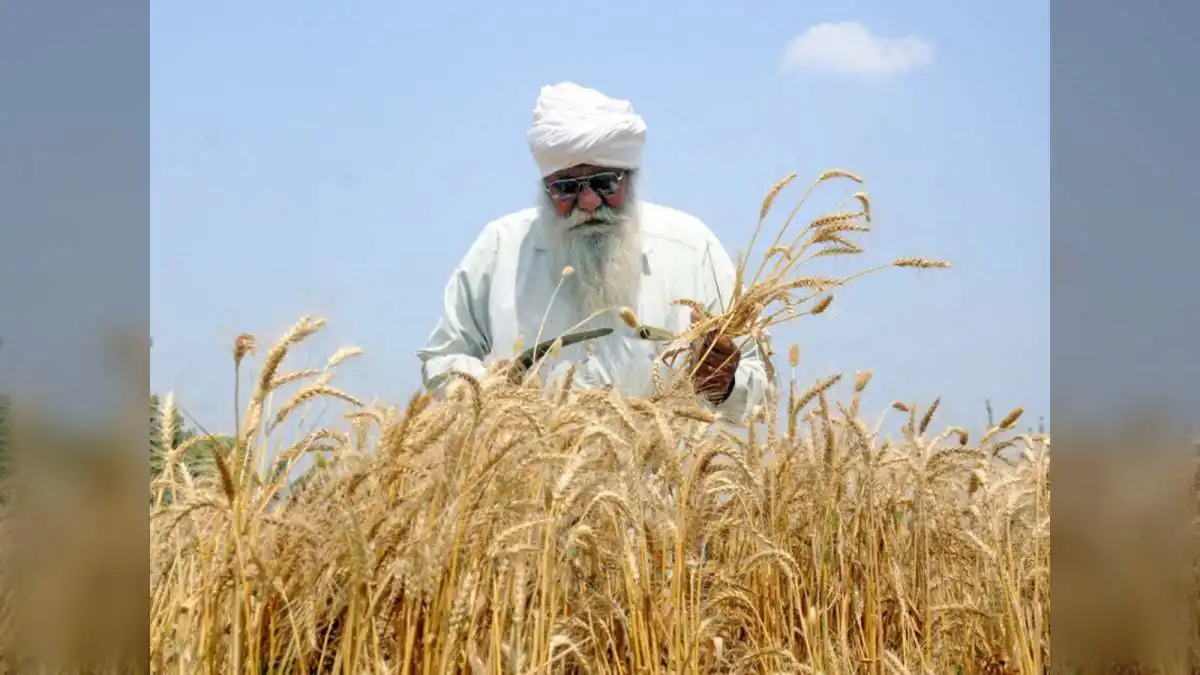
For India's wheat farmers, the projected export opportunity — if it translates effectively into on-ground demand and price outcomes — could carry meaningful economic benefits. Sustained export demand can help support prices, reduce the risk of price crashes during surplus harvests, and improve overall farm-sector economics.
For Indian agri-processors — including the flour milling industry, semolina producers and speciality wheat product exporters — the policy shift and market opportunity create expanded commercial horizons that were previously constrained by export restrictions.
For the broader Indian agricultural ecosystem — including seed companies, agricultural equipment manufacturers, warehousing and cold chain providers, and logistics firms — a more export-oriented wheat sector represents growing business potential across the value chain.
Policy and Institutional Impact
For the Government of India — including the Ministry of Consumer Affairs, Food and Public Distribution; the Ministry of Commerce; and the Agricultural and Processed Food Products Export Development Authority (APEDA) — the policy shift toward liberalised wheat exports opens up new opportunities for supporting the sector's growth while maintaining the balance between export earnings and domestic food security priorities.
For state governments in India's key wheat-producing states — including Punjab, Haryana, Madhya Pradesh, Uttar Pradesh and Bihar — the export opportunity carries potential positive implications for farmer incomes and rural economic development.
The Strategic Trade Impact
For India's broader trade strategy, the wheat export opportunity fits into a larger picture of expanding agricultural export earnings. India has increasingly positioned itself as a significant agricultural exporter across categories including rice, spices, marine products, tea, coffee, sugar and horticultural products. Adding wheat to that portfolio in a more sustained way would further strengthen the diversification of India's agricultural export mix.
For India's role in global agricultural markets, becoming a more reliable long-term wheat exporter would also enhance the country's strategic positioning in international commodity trade discussions.
Global Food Security Impact
Beyond the immediate commercial dimensions, India's expanded role in global wheat trade also carries important implications for global food security. Countries that depend heavily on wheat imports — particularly those in Africa, the Middle East and parts of Asia — benefit from having a diversified base of supplier nations to source from.
By emerging as a more active wheat exporter, India can contribute to that diversification — helping importing countries build more resilient food supply chains while capturing the associated commercial value for its own economy.
Cultural and Economic Impact
For India's cultural narrative around agriculture, the growing export potential of wheat adds another positive chapter to an ongoing story of Indian agricultural strength. Every major agricultural export success — whether in basmati rice, spices, tea or now potentially in wheat — reinforces India's global reputation as a serious agricultural producer and exporter.
For the millions of Indian farmers whose livelihoods depend on the wheat crop, seeing their product recognised as globally competitive carries both economic and emotional value.
The Bigger Picture
The ASSOCHAM report offers a compelling articulation of an opportunity that could meaningfully reshape India's wheat sector over the coming years. A record domestic harvest of 121 MMT. Comfortable Central Pool stocks at 51.3 MMT against a 27.5 MMT buffer norm. Newly liberalised export rules covering wheat, wheat flour and value-added products. Strong demand prospects across five key international markets. A competitive price advantage of about $35 per tonne over international prices. Favourable geographic positioning for major importing regions. And a global wheat market where leading exporters are facing production declines even as demand stays firm.
Together, these factors create exactly the kind of confluence that unlocks genuine commercial opportunity for the sector.
For India's wheat farmers, processors, exporters and policymakers, the coming months will offer important indicators of how effectively this opportunity is translated into actual export outcomes. Effective supply chain coordination. Strong market development efforts in target countries. Consistent product quality standards. Reliable delivery capabilities. Competitive pricing supported by disciplined commercial approaches.
All of these will matter in determining whether the $1.5 billion opportunity identified in the report is realised over the coming quarters.
For India's broader economy, the wheat export potential fits into an encouraging narrative of expanding agricultural export earnings and strengthening India's role as a serious contributor to global agricultural trade.
As Indian agri-businesses now respond to the newly created commercial opportunities, and as global buyers continue to search for reliable, competitively priced wheat suppliers, the coming months will offer clear evidence of how meaningfully this alignment of policy, production and price advantage translates into actual export outcomes.
But the direction is unmistakably positive. India's wheat sector is entering a period of genuine opportunity. The policy environment supports it. The production position enables it. The price advantage empowers it. The geographic positioning strengthens it. And the global market conditions welcome it.
For everyone with a stake in India's agricultural future — from farmers in Punjab to millers in Uttar Pradesh to exporters in Mumbai to policymakers in New Delhi — Wednesday's ASSOCHAM report represents exactly the kind of clear-eyed articulation of opportunity that helps turn potential into realised value. And in that potential lies not just a business story but a story of Indian agriculture continuing to strengthen its position on the world stage, one harvest, one policy shift, and one export shipment at a time.