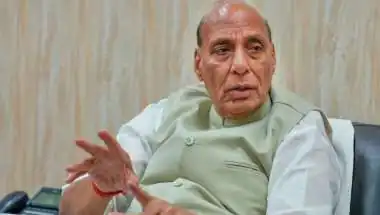
For the millions of entrepreneurs, small factory owners and manufacturing professionals across India, the message was direct — the world is opening up, and Indian MSMEs must be ready to seize the opportunity.
The Central Vision
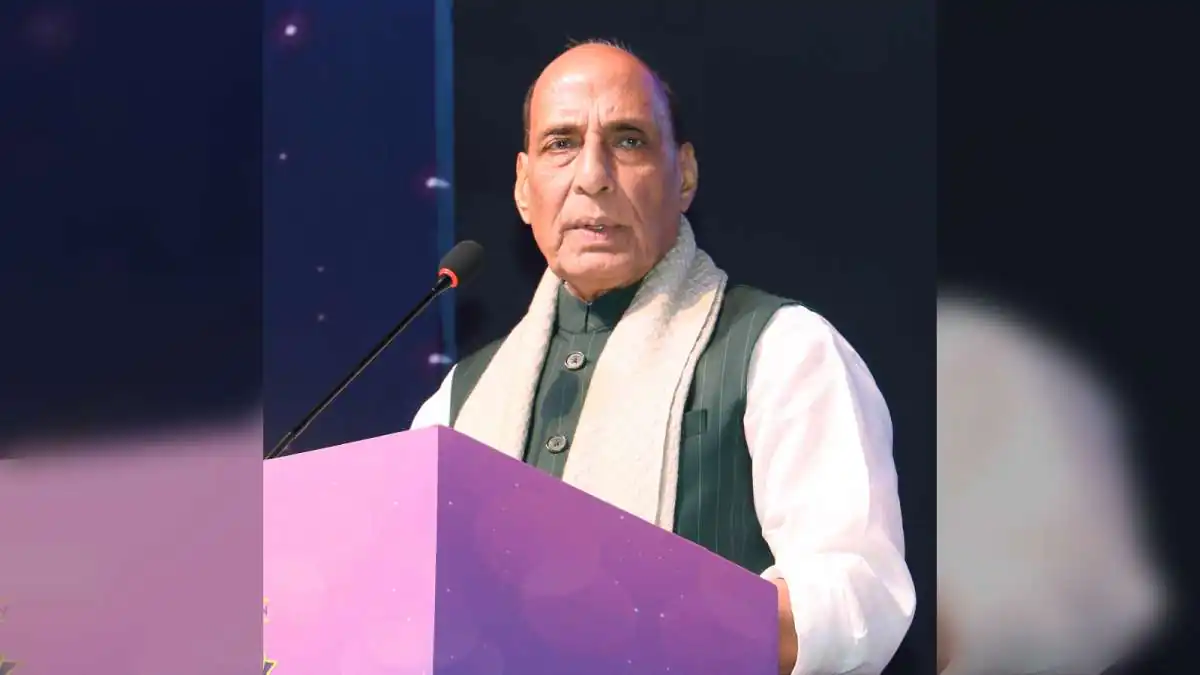
At the heart of Rajnath Singh's address was the elegant three-part principle he framed for the country's manufacturing future — Make in India, Make for India, and Make for the World.
That formulation captures three important layers of ambition. First, that India must continue building its manufacturing base at home. Second, that this manufacturing must serve the needs of the Indian market itself, reducing import dependence in strategic categories. And third, that Indian manufactured goods must increasingly find their way into global markets — with quality, reliability and technological sophistication as their calling cards.
The Call for R&D Investment
Rajnath Singh's most practical message to MSMEs focused on a specific, actionable priority — investment in research, development and technology upgradation.
He called upon small and medium enterprises to invest a portion of their turnover in R&D and to build partnerships with universities, IITs, research institutions, DRDO laboratories, startups and large industries to strengthen their technological capabilities.
That framing is important. Traditionally, R&D has been perceived as the domain of large enterprises with substantial budgets. Encouraging MSMEs to invest in their own technological capabilities — through structured collaborations with academic and research institutions — is exactly the kind of shift that can meaningfully upgrade the competitiveness of India's small manufacturing ecosystem.
The Viksit Bharat 2047 Anchor
The Minister positioned the MSME vision within India's larger Viksit Bharat @2047 framework — the country's overarching development ambition for its centenary of independence.
He said the vision of Viksit Bharat 2047 represents an India that is globally competitive in manufacturing, leads in technology and innovation, and is self-reliant in strategic and economic capabilities — while generating sufficient employment opportunities for the country's youth.
That anchoring matters. It positions today's MSME growth agenda not as a standalone economic initiative but as an essential component of India's long-term national development trajectory.
Global Supply Chains Present a Historic Opportunity
Highlighting the ongoing shifts in global supply chains, Rajnath Singh pointed out that current international economic realignments present a major opportunity for Indian MSMEs to expand their presence in international markets.
As global manufacturers increasingly look to diversify their supplier bases, Indian MSMEs have a genuine window to position themselves as reliable, capable, competitively priced partners for international companies. That opportunity is time-sensitive — and requires MSMEs to build the capabilities, quality standards and export readiness needed to capture it.
FTAs Open Up New Markets
The Minister pointed to the government's ongoing efforts under Prime Minister Narendra Modi to deepen trade partnerships with key countries through Free Trade Agreements (FTAs), including with the US, UK, New Zealand, Oman, Switzerland and the European Union.
"These FTA networks open up a vast ocean of opportunities for global trade and exports for MSMEs and industries. They must fully leverage these international partnerships and trade agreements through government schemes such as Credit Guarantee Expansion and GST Rationalization, and take Indian products to every corner of the globe," he said.
That's a powerful invitation. The combination of expanded market access through FTAs, financial support through schemes like the Credit Guarantee Expansion, and regulatory simplification through initiatives like GST Rationalization creates an ecosystem that is meaningfully more supportive of MSME internationalisation than it has been in the past.
The Numbers Behind the Ambition
The scale of India's MSME sector is genuinely staggering. Rajnath Singh noted that the number of MSMEs in India has grown from around 4.67 crore in 2012-13 to approximately 8 crore at present — reflecting the expanding entrepreneurial ecosystem across the country.
That's nearly a doubling of the MSME base over a little more than a decade. It signals not just an expansion of formal enterprise registration but a deeper cultural and economic shift — one where more and more Indians are seeing entrepreneurship as a viable path to livelihood, wealth creation and impact.
The Future-Facing Sectors
Rajnath Singh identified a set of specific technology-intensive sectors where MSMEs have significant growth opportunities in the coming years.
These include drones, artificial intelligence, robotics, cybersecurity, advanced electronics, sensors, autonomous systems, advanced materials, space and quantum technologies.
That's a strikingly forward-looking list. It signals a clear expectation that India's MSME growth over the coming decade will not just come from traditional manufacturing categories but from the frontier technology domains that are shaping the global economy today.
For MSMEs currently operating in adjacent sectors — or considering pivoting toward higher-value opportunities — the list offers valuable strategic direction.
The Emphasis on Quality and Reliability
The Minister was particularly direct on one critical dimension of MSME global competitiveness — quality and reliability.
"Indian MSMEs must establish their identity in global markets through quality and reliability. The importance of these attributes is even greater in the defence sector, where the reliability of every component directly affects the operational effectiveness of the Defence Forces," he said.
That emphasis carries additional weight given Rajnath Singh's own portfolio as Defence Minister. In the defence manufacturing ecosystem — where MSMEs increasingly participate as component suppliers to larger defence platforms — quality and reliability are not just competitive differentiators. They are strategic necessities.
Why It Matters
MSMEs form the backbone of India's economic and employment landscape. They contribute significantly to national manufacturing output, exports, and employment generation across urban and rural India. When the government focuses attention, resources and policy support on strengthening this sector, the effects ripple through virtually every part of the Indian economy.
Rajnath Singh's address on Tuesday did something particularly valuable. It combined ambition with actionability. It laid out a compelling long-term vision (Make for the World) while also offering practical guidance (invest in R&D, partner with research institutions, leverage FTAs, use government schemes).
For MSMEs across India, that combination provides a clear roadmap for how to translate government policy support into real business growth.
Industry Impact
For the Indian manufacturing ecosystem, the address reinforces the strategic direction the government has been consistently articulating over the past decade — one where India transitions from being a large domestic market to a genuinely global manufacturing hub.
For technology partners, universities, IITs and research institutions, the call for MSME collaboration opens up new opportunities to co-create value with the enterprise sector. For financial institutions, particularly those involved in Credit Guarantee Expansion, the framing sets clear expectations around supporting MSME internationalisation.
For young entrepreneurs considering starting their own MSME ventures, the message could hardly be more encouraging. India's entrepreneurial ecosystem is being backed at the highest levels of government, with clear vision, real financial support, and expanding market access.
Employment and Youth Impact
Perhaps the most emotionally resonant element of the Minister's address was his linkage of the MSME vision to youth employment. India's demographic strength — with a large young population entering the workforce over the coming decades — creates both an opportunity and a responsibility.
MSMEs are among the largest job creators in the country. When they grow, jobs grow. When they upgrade technologically, they create higher-skilled jobs. When they expand into global markets, they create export-oriented jobs. All of these outcomes support the broader Viksit Bharat 2047 vision of ensuring that India's youth have meaningful, high-quality employment opportunities.
Cultural and Economic Impact
The growth of India's MSME sector from 4.67 crore to 8 crore over roughly a decade also reflects a broader cultural shift underway. Entrepreneurship is increasingly being embraced across India — including in tier-2 and tier-3 cities, in rural regions, and among first-generation entrepreneurs from diverse backgrounds.
That cultural shift, combined with strong policy support and growing global demand for reliable manufacturing partners, positions India uniquely well to become a manufacturing superpower over the coming decades.
The Bigger Picture
Rajnath Singh's Tuesday address in Greater Noida is more than a routine ministerial engagement with an MSME event. It is a clear, ambitious articulation of where India's manufacturing story is headed — and where its 8 crore MSMEs fit into that journey.
Make in India. Make for India. Make for the World. Those three phrases, taken together, represent one of the most strategically important economic visions being articulated by any government today.
For MSMEs, the message is clear. Invest in R&D. Build partnerships with research institutions and larger industries. Take quality and reliability seriously. Leverage FTAs and government schemes. Explore frontier technology sectors like AI, drones and quantum. And do all of this with the confidence that comes from being backed by clear political support at the highest levels of the country.
For India as a whole, the vision represents a genuine opportunity — one where the ambition of Viksit Bharat 2047 gets translated into the everyday work of millions of MSMEs, factories, entrepreneurs and workers across the country.
Because as Rajnath Singh so effectively reminded everyone on Tuesday — India's manufacturing future doesn't just depend on large corporates. It depends on the millions of small and medium enterprises that make up the beating heart of the country's economic engine. And when those enterprises are equipped, encouraged and empowered to compete globally, the results will not just transform India. They will transform the very way the world sees Indian manufacturing.
Also Read: Defence Manufacturing Boom: India Achieves ₹1.78 Lakh Crore Output, Private Sector Share Rises































.jpg)