India's biggest annual medical entrance for postgraduate courses is upon us. The National Eligibility-cum-Entrance Test-Post Graduate (NEET-PG 2026) will be held on Sunday across 1,300 centres in 340 cities across the country, with more than 2.73 lakh medical graduates preparing to sit for one of the most competitive examinations in the Indian healthcare system. The scale, the stakes and the safeguards this year all signal one clear reality: NEET-PG 2026 is being run as the tightest, most closely watched edition of the exam so far.
That kind of double-digit growth in registrations reflects both the rising demand for postgraduate specialisation among Indian medical graduates and the growing weight NEET-PG carries as the single most important gateway to advanced clinical training in the country.
What the Exam Unlocks
Clearing NEET-PG is what allows doctors to secure seats in various advanced medical courses across government and private colleges — most notably MD (Doctor of Medicine) and MS (Master of Surgery) programmes. These programmes shape the future of India's specialist medical workforce, from cardiologists and paediatricians to surgeons and radiologists.
In effect, every one of the 2.73 lakh candidates walking into an exam centre on Sunday is not just taking a test — they are entering the funnel that will define the country's specialist healthcare capacity for the next decade.
JP Nadda's Preparedness Review
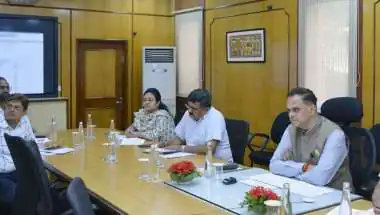
Union Minister for Health and Family Welfare J.P. Nadda earlier reviewed the preparedness for NEET-PG 2026, and the message he delivered was unambiguous. He directed all stakeholders to ensure a smooth, secure, transparent and technology-enabled examination process — placing integrity at the heart of the exam's execution.
Nadda urged candidates not to be misled by rumours or fraudulent claims relating to the examination — a category of misinformation that has plagued high-stakes Indian exams in recent years.
'Any Claim of Prior Access Is False'
The Union Minister was categorical about the security of the exam paper itself. He highlighted that the final question paper is selected through a highly secure, encrypted and time-bound process shortly before the commencement of the examination. Multiple layers of technological and operational safeguards ensure the paper's confidentiality until the scheduled start time.
"Any claim of prior access to the question paper by anyone is therefore entirely false and intended to mislead candidates," Nadda said. He advised aspirants to rely only on official communications issued by NBEMS and the Ministry of Health and Family Welfare, and to promptly report any suspicious activities or attempts at unfair practices.
The Security Framework
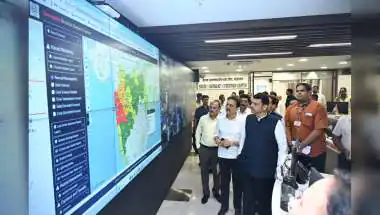
The scale of the security architecture designed for NEET-PG 2026 is significant. The authorities are relying on an extensive framework that includes CCTV surveillance, biometric verification, physical frisking, signal jammers, dynamic computer allocation, and live monitoring through central and regional command centres. More than 60,000 examination personnel have been deployed across the country to run and monitor the process.
Every one of these interventions is designed to close off known vulnerability points — from paper leaks and impersonation to electronic cheating and centre-level manipulation.
The Reforms This Year
Several student-centric reforms have also been introduced for the 2026 edition of the exam. Candidates were allowed to indicate three state preferences for test centres, with their correspondence state as the mandatory first preference. In addition, the information regarding the test city was communicated nearly three weeks in advance — giving students sufficient time to plan travel and accommodation.
These are meaningful, empathy-driven improvements. For an exam of this scale, where candidates travel across states and often incur significant logistical costs, three-week advance notice on the city itself is a genuine quality-of-life upgrade.
Revised Paper Structure
The examination pattern has also been revised. Candidates will now attempt 180 questions in 210 minutes — a change that allows more time per question and reduces the extreme pace pressure many previous editions of NEET-PG have been criticised for. That extra breathing room per question can make a meaningful difference in accuracy, particularly on the more complex clinical scenario questions.
Biometric Backup and Aadhaar Integration
To further strengthen candidate authentication, Aadhaar-based authentication has been integrated during both registration and examination. In addition, iris-based biometric verification will now serve as a backup where fingerprint authentication fails — a technical redundancy that will help prevent impersonation and ensure that only the rightful candidate takes the exam.
Why It Matters
NEET-PG is more than an academic examination — it is a national gateway that determines who becomes an MD, an MS, and eventually a specialist in India's healthcare system. Every reform in the exam directly shapes the country's future medical workforce. And every security lapse in it directly shakes public trust in the country's meritocratic infrastructure.
A 12.5% jump in registrations signals rising aspiration. A 60,000-strong personnel deployment signals rising responsibility. Together, they define why NEET-PG 2026 is being watched so closely by aspirants, families, medical educators and policymakers alike.
Cultural and Institutional Impact
For lakhs of families across India, Sunday will be a day of extraordinary emotional intensity. Behind each of the 2.73 lakh candidates sit parents, mentors, teachers and often years of academic sacrifice. The exam's success as a fair, transparent process directly shapes public confidence in Indian medical education itself. Every candidate who walks in trusting the process is a candidate who walks out trusting the system that shaped them.
The Bigger Picture
NEET-PG 2026 represents an important moment for Indian medical education. It is bigger than any previous edition in scale, tighter than any previous edition in security, and more candidate-friendly than any previous edition in structural design. When over 2.73 lakh medical graduates sit down on Sunday morning to attempt 180 questions in 210 minutes, they will be doing much more than answering a paper. They will be walking through the doorway to India's next generation of specialists. And if the process holds — securely, transparently, and fairly — then Sunday's exam will not just deliver results; it will strengthen the very institution behind them.






































.jpg)