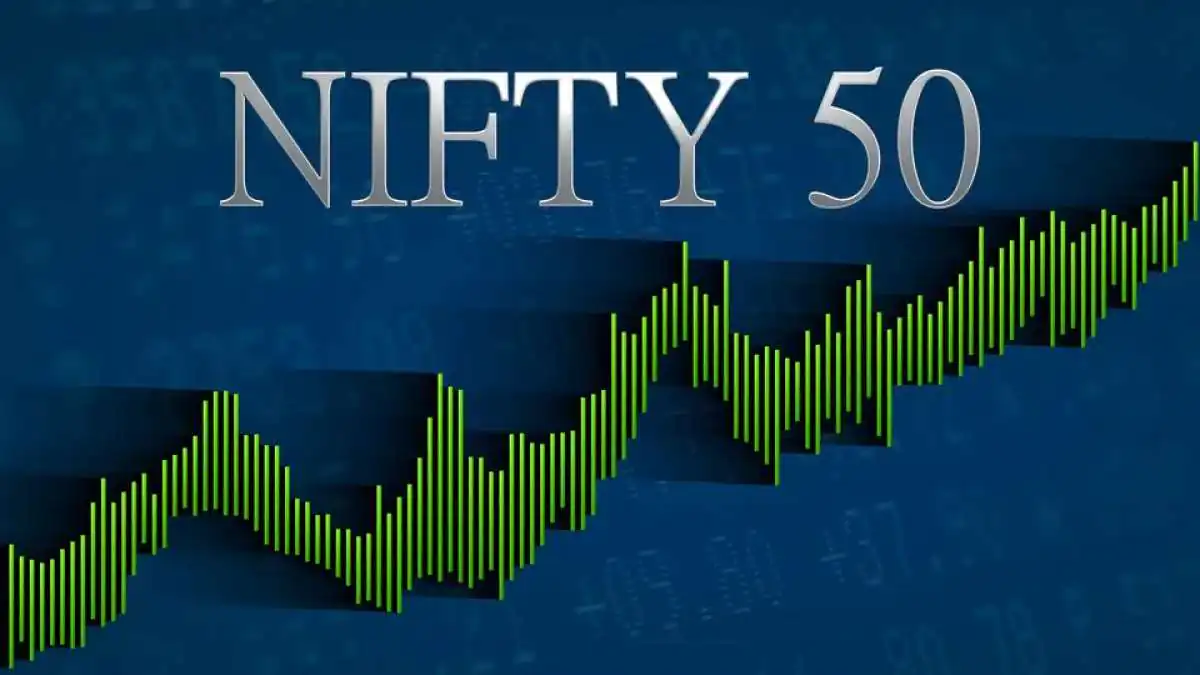
Nifty 50 Outlook: Domestic Investors, Corporate Earnings and Credit Growth Support Indian Market
Economy: According to a report, India's domestic fundamentals, including rising corporate earnings, sustained credit demand growth, and stable institutional flows, are driving the country's economy forward.
Muskan KumawatVerified Public Figure • 16 Apr, 2026Journalist
Aug 25, 2026 • 7:11 PM
B
Business
NEWS CARD
“Nifty 50 Outlook: Domestic Investors, Corporate Earnings and Credit Growth Support Indian Market”
Read more onen.sangritimes.com/s/be4737
25 Aug 2026
https://en.sangritimes.com/s/be4737
Copied
Nifty 50 Outlook: Domestic Investors, Corporate Earnings and Credit Growth Support Indian Market
Despite growing strains in West Asia, higher crude oil prices due to the Strait of Hormuz crisis, and a decline in AI trade, the domestic market remains robust. This is according to PL Asset Management's monthly report. The domestic fundamentals in India, including rising corporate profits, continued credit demand growth, and flow stability, are driving the Indian economy due to congruence in growth, flows, and valuation.
The report indicates that the month of July has been affected by the breaking down of the ceasefire with Iran and fresh disruptions at the Strait of Hormuz. Although there was some activity of tanker traffic on account of a deal reached in May, it was only to continue for a short while. Since March, crude oil prices have been in a wide range of $80 to $120 per barrel on account of attacks and blockades of the ships.
According to the report, the US inflation rate has fallen compared to the previous year, leading the US Fed Chairman Kevin Warsh to cut his expectation for an imminent action. This has resulted in volatility in the global markets. For instance, in July, the Hang Seng gained 13.13 percent whereas the KPW dropped 22.19 percent. The Nasdaq 100 lost 6.61 percent whereas the Nikkei 225 lost 8.14 percent.
According to the report, artificial intelligence (AI) and semiconductor-based trading, which had driven many Asian markets earlier in the year, saw a widespread decline. Meanwhile, the Nifty 50 rose 2.17 percent compared to the previous month and closed at 24,383.60 at the end of July, while the rupee stood at 95.42 against the dollar. The report states that India's domestic fundamentals remain stable despite the volatile external environment.
The report states that despite several changes made to promote foreign investment, domestic institutional investors (mutual funds, insurance companies, and pension funds) continued to be net buyers for the 37th consecutive month in July, the longest such streak since 2007. They continued to absorb foreign selling throughout the month.
According to the report, corporate earnings saw a significant jump in the first quarter of FY2027. The average EPS of listed companies grew 24 percent year-on-year, compared to just six percent in the previous quarter. The report states that sales, operating profit, and PAT of companies all increased simultaneously. Industrial production also reached its highest level in nearly two years, with capital goods and electrical equipment producing the most output. This indicates that economic recovery is driven by investment, not just consumption.
According to the report, three independent data series are significantly ahead of the average over the past five years. These signals are broader than the numbers themselves. Industrial production (IIP) grew by 7.3 percent in June, compared to the five-year average of around 5.5 percent. Bank credit grew by 17.7 percent in July, compared to the average of around 11.5 percent. GST collections grew by 15.4 percent, reaching a 14-month high, compared to the average of around 10.0 percent. Meanwhile, easing inflation, lower bond yields to 6.77 percent, and the Reserve Bank of India's decision to keep interest rates stable at 5.25 for the fourth time have boosted India's economy.
The report presents a positive outlook for the Indian stock market. Industrial output and credit are at multi-year highs, while earnings growth has accelerated from near zero to 24 percent in the new quarter. Although the Nifty has performed significantly worse than global stock markets in dollar terms, buying by domestic institutional investors and foreign investors is nevertheless signaling a positive outlook. The key factors in the future will remain external, with oil, currency, and sustained earnings growth over the next few quarters determining the economic direction.
Muskan Kumawat is a Journalist & Content Writer at Sangri Times English, covering a wide range of topics, including news, entertainment, and trending stories. With a strong passion for storytelling and in-depth reporting, she delivers engaging and informative content to readers.

















































.jpg)