
















































.jpg)












Why Bihar Floods Every Year: Nepal, Gandak and the High Dam Question
Bihar faces a second phase of severe floods with six to seven districts hit. CM Samrat Choudhary surveyed East Champaran as leaders renewed calls for a high dam with Nepal.



Key Highlights
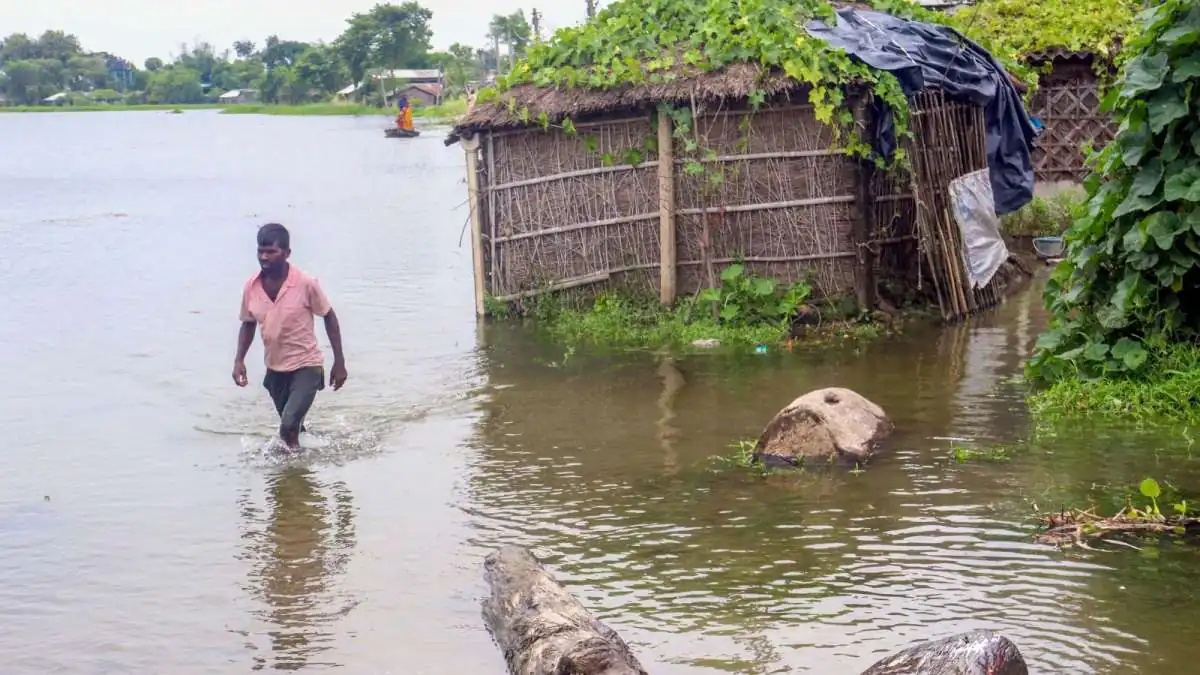
- Second phase: JD(U) said Bihar is facing a second phase of severe floods, with around 5.5 lakh cusecs of discharge and six districts badly hit.
- CM on the ground: Chief Minister Samrat Choudhary conducted an aerial survey and inspected Hussaini block in East Champaran near Dumaria Ghat Bridge.
- Relief measures: Embankment protection, relief camps, community kitchens and evacuation protocols are in place, with NDRF and SDRF deployed.
- Weather alert: A yellow alert for rain has been issued for 12 north Bihar districts, including East Champaran.
- Long-term fix: JD(U)'s Shyam Rajak said the Centre has accepted the demand for a high dam in coordination with Nepal.
For many families in north Bihar, floods are not an emergency but a season. Bihar Minister Ram Kripal Yadav captured that reality on Tuesday as the state faced a fresh surge in its rivers.
"Sometimes it is the Gandak that causes havoc, and sometimes it is the impact from Nepal. A flood is a disaster, and this is what the entire state of Bihar is suffering from. Every year, there is devastation. Farmers' crops are destroyed, infrastructure is damaged, and whatever is rebuilt over the course of a year is destroyed again. The situation in Bihar, particularly in six to seven districts, has become very difficult," he said.
The CM's Survey
Chief Minister Samrat Choudhary conducted an aerial survey of flood-affected areas and reviewed the preparedness of local administration. He visited Hussaini block in East Champaran district to assess the situation around Dumaria Ghat Bridge and nearby areas, and sought updates from officials on water levels and response measures.