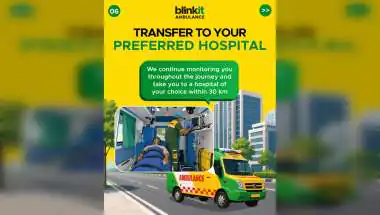
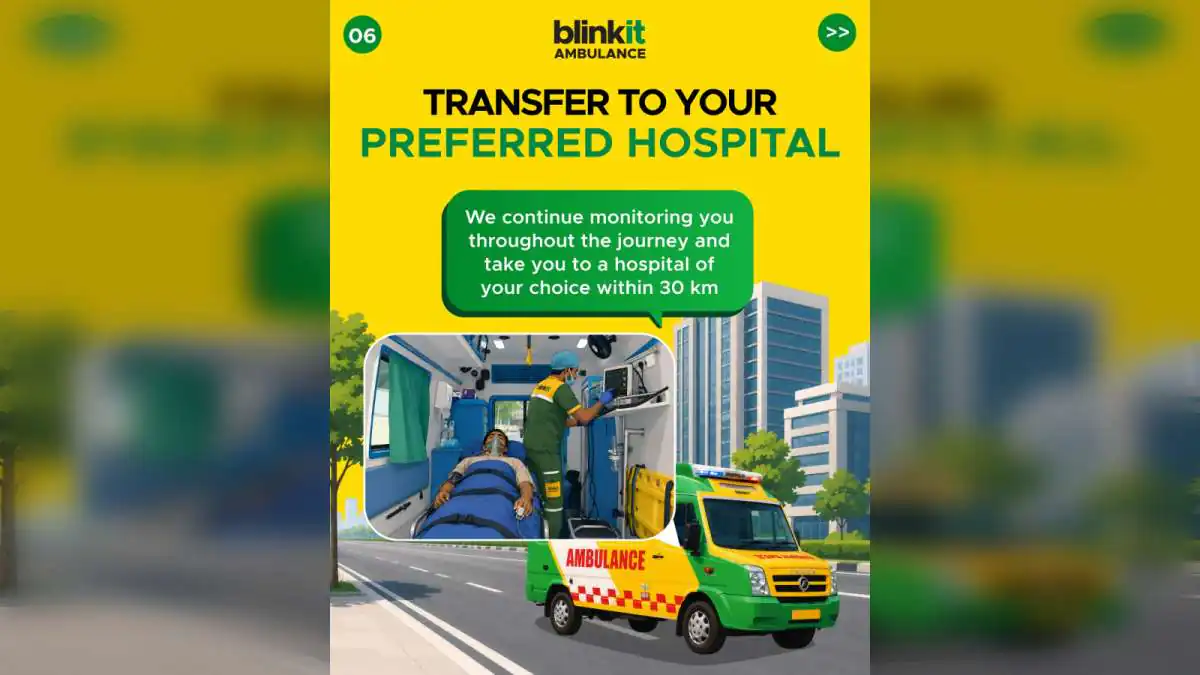
For two years, Blinkit's 10-minute ambulance service has been one of the most talked-about experiments in India's quick commerce space. It had a simple promise: medical help in minutes, at no cost. Now the company has changed one part of that model, and the reason shows how difficult it is to run a free service.
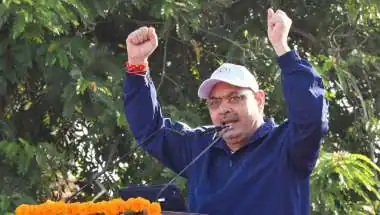
Quick commerce platform Blinkit on Thursday introduced a flat fee of Rs 2,500 for non-emergency ambulance bookings. Emergency transfers will remain free. Deepinder Goyal, founder of Eternal, announced the change in a post on X. He said the move is meant to keep the fleet available for critical medical situations.
The numbers explain why. According to Goyal, the service has handled around 42,000 cases in the past two years. Nearly 20,000 of these were emergency runs. That means more than half of all trips were for non-emergency needs.
On X, Goyal described the problem clearly. "With everything free, a growing share of bookings are for routine checkups, hospital visits and hospital-to-home transfers, trips that an Uber or private transport could have handled just as easily. Every such booking keeps a fully equipped emergency ambulance with paramedics off the road when someone's life may depend on it," he wrote.
This is a common issue with free public services. When something costs nothing, people use it for all kinds of needs, including those that could be handled another way. For a regular delivery service, that only means some waste. For an ambulance carrying paramedics and life-support equipment, it could mean a vehicle is busy taking someone home from a routine check-up while a heart attack patient waits nearby.
Using price to sort cases
The new fee works as a filter. Goyal said the Rs 2,500 charge is broadly in line with what private ambulances charge. So the change does not undercut the market, and it does not make Blinkit's service a cheaper replacement for ordinary private transport.
"So we are making a change from now onwards: Emergency transfers – free, as always. Non-emergency transfers – Rs 2,500, charged after the trip. Broadly in line with what private ambulances charge. This money goes to Eternal Foundation, which runs these ambulances and will help us scale them even further," he posted.
Goyal also linked the service to the founding idea behind Zomato. "I started Zomato with a spirit of service. Blinkit Ambulance is what that spirit of service looks like today. In the last 2 years, we have served 20,000 emergency cases (42,000 cases in total). We haven't charged a single rupee for any of them. And we want to keep it that way," he said.
The company expects the fee to sharply reduce non-emergency use and keep its 10-minute response time intact for urgent cases. "10-minute ambulances have saved and can save thousands of lives, and we need to keep them available for emergencies that need them the most," Goyal said.
What to watch next
The bigger question is how the service will decide what counts as an emergency. Because the fee is charged after the trip, the definition will matter a lot to patients and their families. If Blinkit handles it fairly and clearly, this could become a useful model for other private emergency services in India: keep life-saving trips free, and charge for convenience.
(With inputs from IANS)