Gujarat has crossed a significant milestone under the Centre's urban water mission. The state has completed 497 projects worth Rs 4,832 crore under the Atal Mission for Rejuvenation and Urban Transformation (AMRUT) 2.0, according to a state government statement issued on Thursday. Together, these projects have added more than 2.72 lakh household tap connections and over 1.03 lakh sewerage connections across urban areas.
The headline figures matter. But a closer look at how the money has been spent shows something more useful about where Gujarat's cities stand, and what still needs to be done.
Water supply clearly dominates the spending. The state has completed 224 water supply projects worth Rs 2,937 crore, which is more than half of the total investment. These works have added 539 million litres per day (MLD) of water treatment capacity, 1,366 lakh litres of storage capacity and 2,128 km of distribution pipelines. The new tap connections are expected to benefit approximately 23.87 lakh people.
Sewerage has moved on a smaller scale. Seventy-seven projects worth Rs 1,500 crore have been completed across 31 AMRUT cities, adding 162 MLD of wastewater treatment capacity and 931 km of sewer network. More than 1.03 lakh new household sewer connections have been provided, benefiting around 31.76 lakh citizens.
This imbalance is built into the mission's design. When the Union Ministry of Housing and Urban Affairs launched AMRUT 2.0 on October 1, 2021, it aimed to provide tap water to households in all Urban Local Bodies (ULBs), while sewerage and septage coverage was limited to the 31 AMRUT cities. Urban planners have long warned that when water supply grows faster than wastewater handling, smaller towns can face drainage stress. That makes the next phase of sewerage work just as important as the taps already installed.
More than pipes: lakes, parks and livelihoods
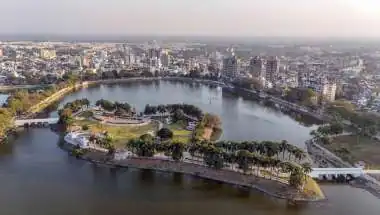
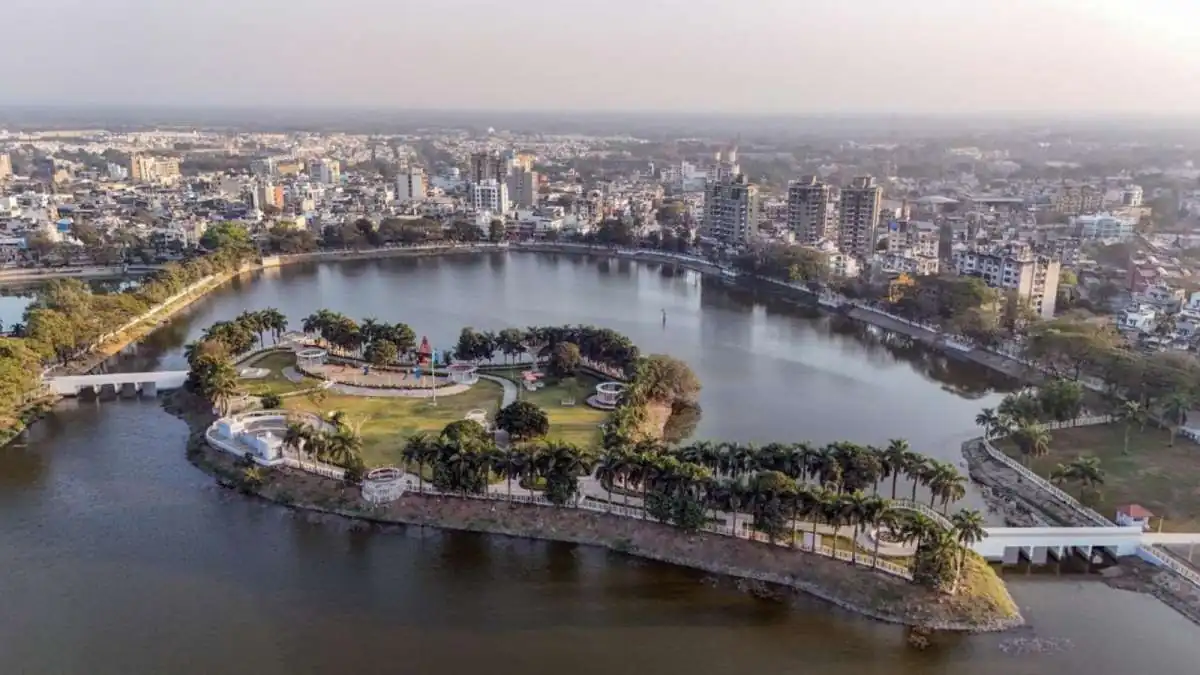
The less discussed parts of the programme may have the longest-lasting impact. Under lake rejuvenation, 97 projects worth Rs 301 crore have been completed, reviving 78 lakes. For a state that regularly deals with water stress, restored lakes can support groundwater recharge and reduce dependence on distant sources, which is in line with the mission's focus on water security and reviving water bodies and wells.
Another 99 projects worth Rs 94 crore have created or developed 87 gardens and parks, adding much-needed open space in growing cities.
The programme also has a social side. Through the 'Amrut Mitra' and 'Women for Trees' initiatives, women's Self-Help Groups have been brought into urban infrastructure work. Around 178 SHGs are taking part in Women for Trees, under which 165 projects worth Rs 604.158 lakh have been undertaken and more than 1.52 lakh trees planted so far.
The road ahead
The state government said the projects are being carried out under the leadership of Chief Minister Bhupendra Patel, in line with the Centre's broader goal of better urban infrastructure and improved ease of living.
The true test will come in the coming years. Residents will judge the mission by whether taps deliver regular, clean water, whether sewer lines reduce waterlogging, and whether the revived lakes stay healthy. Gujarat's numbers show strong delivery so far. The next challenge is maintaining what has been built.
(With inputs from IANS)