














































.jpg)











Building Water Resilience: New-age Solutions for Bengaluru’s Water Crisis
To address this challenge, a multifaceted approach to water management is required. At the city level, one crucial intervention is the identification and management of local water zones. Bengaluru is blessed with three watershed catchment areas—Hebbal Valley, Vrishabhavathi Valley and K-C Valley—which, if managed with respect to land use and urban development, could significantly mitigate [...]


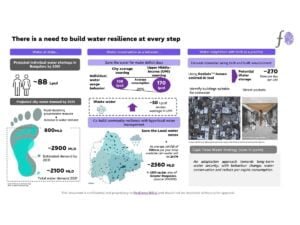

To address this challenge, a multifaceted approach to water management is required. At the city level, one crucial intervention is the identification and management of local water zones. Bengaluru is blessed with three watershed catchment areas—Hebbal Valley, Vrishabhavathi Valley and K-C Valley—which, if managed with respect to land use and urban development, could significantly mitigate water runoff and augment downstream flow. Harnessing water runoff presents an opportunity to optimise water resources and minimise wastage.
Moreover, designing an efficient water system is paramount. Wastewater reuse continues to be an effective intervention. Initiatives such as the Ministry of Housing and Urban Affairs’ campaign to recycle wastewater to meet 20% of the total city water demand provide a promising avenue for sustainable water management. However, there is scope to do much more. Learning from cities like Cape Town – which successfully implemented comprehensive strategies emphasising behavioural change, water conservation and reduction of per capita consumption – equitable distribution of water must be prioritised to achieve long-term water security.