The months of problems in the Middle East have adversely affected global energy security and led nations to reconsider the strategy for securing energy supply sources. However, India is now keen on solving its energy problem at home.
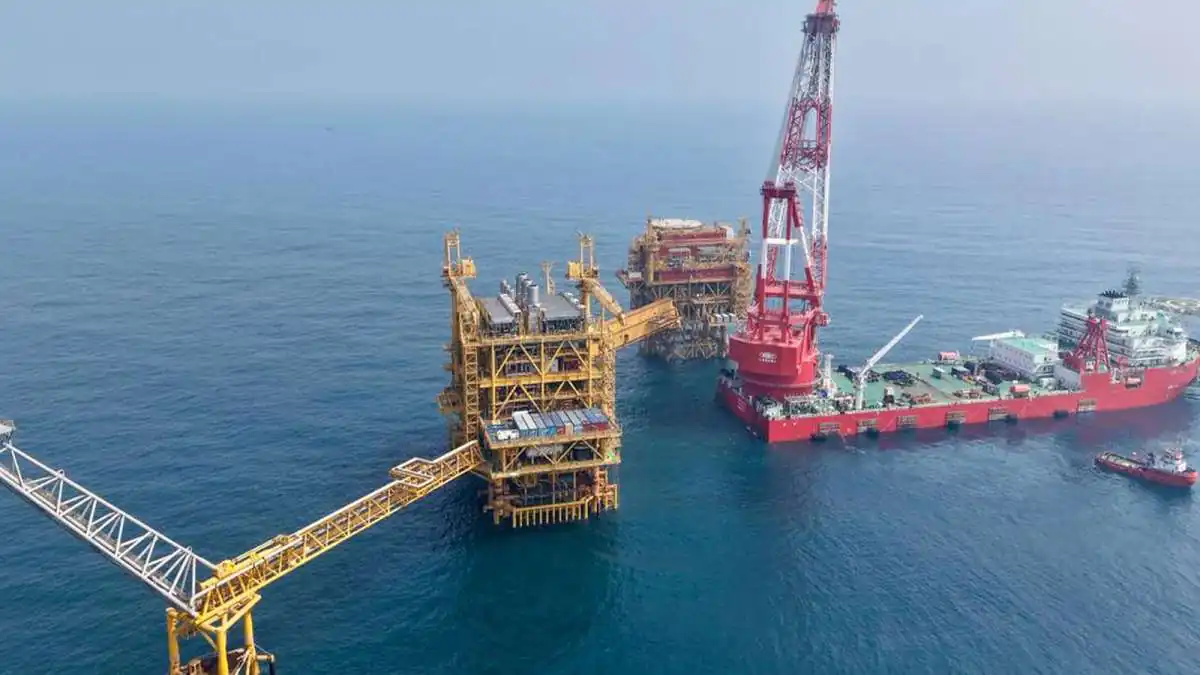
As opposed to being highly dependent on energy imports, India will focus on discovering more oil and gas reserves within its own territory through risk sharing of deep-sea exploration. The reason why companies have been reluctant to get into the business was the heavy investment needed and the uncertainty of returns on the same.
In the recently approved 'Samudra Manthan' National Offshore Exploration Scheme by the Union Cabinet, the central government will contribute 50 percent of the cost of drilling in deep water or ultra deep water exploration, which amounts to a maximum of ₹650 crore per well, whichever is lower.
Officials said this assistance will be provided for 60 exploration wells over the next five years. An official said this is perhaps the first time in the world that a government is funding high-risk exploration from the budget.
This program comes at a time when India is heavily dependent on imported energy. Officials said that crude oil imports have increased from 77% to 88% of the country's needs over the last decade. India also imports nearly half of its natural gas consumption, which is used to manufacture fertilizers, generate electricity, produce CNG, and piped cooking gas.
According to PTI, officials said that the recent conflict in the Middle East, which has disrupted energy supplies, has highlighted the need to strengthen domestic production and reduce dependence on foreign supplies. Another official said that in this regard, 'Samudra Manthan' is a game-changing scheme.
It will benefit companies that have acquired blocks in the previous Open Acreage Licensing Program (OALP) round, as well as those that will acquire blocks in the ongoing bidding round. Eligible companies can claim government assistance of up to ₹650 crore for each qualifying exploration well.
Officials said the scheme is also designed to attract global energy companies to India's offshore basins. The largest portion of the total budget of ₹84,084 crore has been allocated for exploration itself.
Of the total budget, ₹43,200 crore has been set aside for deepwater and ultra-deepwater drilling over five years until 2031. This means that each of the planned 60 exploration wells will receive approximately ₹650 crore.
An additional ₹28,534 crore will be spent on offshore seismic and geological surveys to identify potential drilling sites.
The scheme also includes ₹10,000 crore for common infrastructure, including subsea pipelines and onshore oil and gas receiving and processing facilities. ₹2,000 crore has been allocated for developing oil and gas manufacturing and service zones.
In addition to funding exploration, the government plans to create infrastructure that multiple operators can use together.
Through its 'Common Hub Infrastructure' (CHI) scheme, the scheme aims to develop shared pipelines and processing facilities. This will allow discoveries made by different companies to be commercialized using common assets, rather than requiring separate infrastructure for each project.
Officials say this could reduce development costs, improve project economics, and enable better use of marine engineering and offshore resources.
Hydrocarbon extraction could become more efficient, simplify offshore logistics, accelerate the commercialization of small discoveries, and improve the viability of deepwater and ultra-deepwater projects.















































.jpg)