Before a single diya was lit on Saturday, Ayodhya already had a crowd of travellers, many of them performers rather than spectators. As the 10th edition of Deepotsav opened, the streets of Ramnagari filled with folk artists from different states, each group bringing its own region's dance and costume.
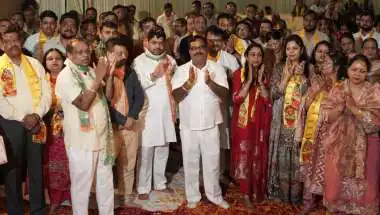
Uttar Pradesh Tourism Minister Jaiveer Singh flagged off the tableaux from Saket College. The procession combined folk culture from several states with scenes from different episodes of the Ramayana. Drums and cymbals set the rhythm, Dhobiya dancers moved through the streets, and women played drums in front of the tableaux. Devotees and tourists showered flower petals on the performers along the route.
For many artists, the trip meant more than one performance. A 15-member team from Mathura presented the traditional peacock dance. Its members said that although they are devotees of Lord Krishna, they considered it a matter of great fortune to perform on the land of Lord Ram.
From much further south, a 15-member tribal team from Telangana performed the Gusadi dance. Wearing traditional attire and crowns adorned with peacock feathers, the group gave an energetic performance to the beat of drums and said they were proud to perform in Ayodhya.
Mathura was also represented by Nagada and Bam Rasiya performers. Team member Laxman Beniwal said his group takes part in the festival every year and had also visited the city during the consecration ceremony of Ram Lalla. He said the scale and enthusiasm of Deepotsav draw him back each year, and he hoped the festival would grow even grander, with more chances for his team to perform.
Not everyone was a regular. One female artist said she had started performing in such cultural programmes only this year and was extremely happy to get the chance in Ayodhya. The artists said their performances were dedicated to Lord Ram and the people of Ayodhya.
The logistics behind the lamps
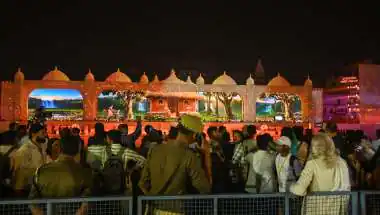
The main event takes place on the banks of the Saryu River after dark. More than 3 million earthen lamps have been arranged across 56 ghats, including Ram Ki Paidi. Around 35,000 volunteers from Avadh University worked continuously for three days to finish the arrangements on Friday. Since Saturday morning they have been filling lamps with oil and placing cotton wicks in them.
The festival has its own management structure: 900 ghat coordinators, 112 ghat in-charges and 27 supervisors oversee the work. In the evening, the diyas will be lit simultaneously in the presence of Vice-President C.P. Radhakrishnan and Chief Minister Yogi Adityanath.
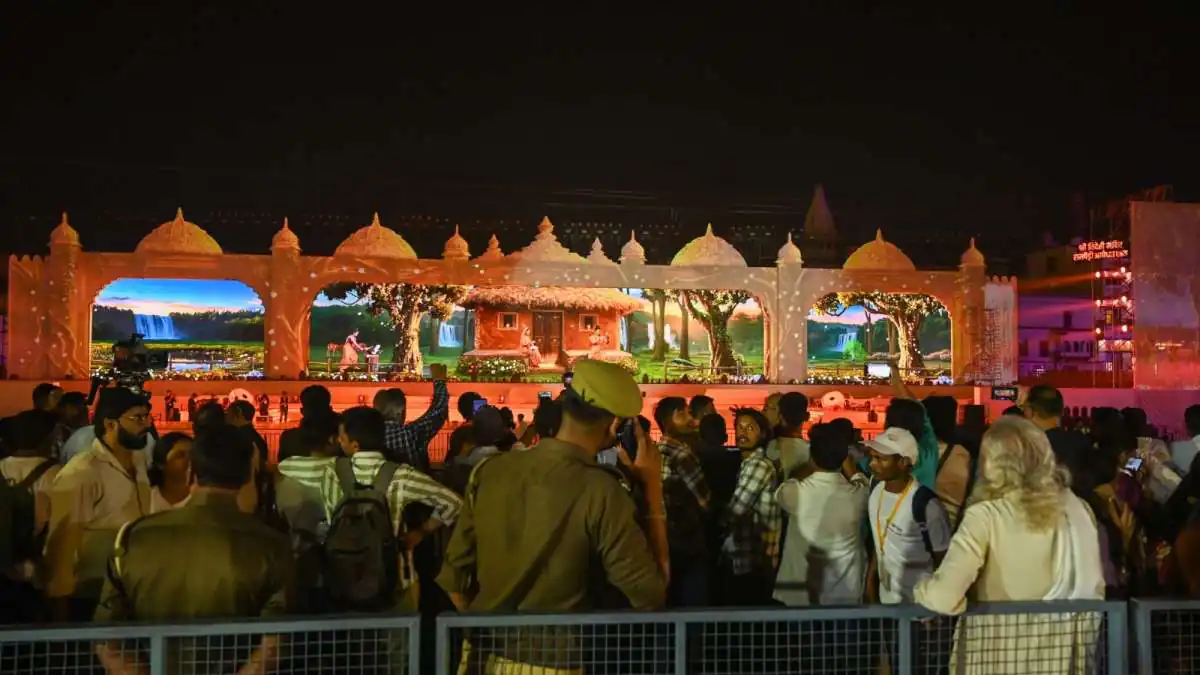
The night programme also includes the Saryu Maha Aarti with 2,147 priests, and a drone show in which 2,100 drones will recreate episodes from the Ramayana in the sky above the riverfront. The Shri Ram Janmabhoomi Temple has been decorated with colourful lights, and devotees and tourists from across the country continue to arrive.
Ten editions in, Deepotsav is no longer only a lamp-lighting ceremony. It has become a platform for folk artists from across India, from a first-time performer to troupes like Laxman Beniwal's that return every year. With folk dances, Ramlila performances and lit lamps across temples, roads and ghats, Ayodhya is hosting a meeting of many regional traditions this weekend, not just a festival of lights.
With inputs from IANS