
























































First Supermoon of the Year Lights Up Indian Skies, Wolf Moon Visible Across Cities
The first supermoon of the new year was visible across the country on Saturday. This moon, visible on the full moon in January, is called the Wolf Moon and appears 30 percent brighter and 14 percent larger than the normal full moon. Several cities, including Delhi, Lucknow, Guwahati, Bhubaneswar, and Kolkata, witnessed its spectacular sight after sunset.


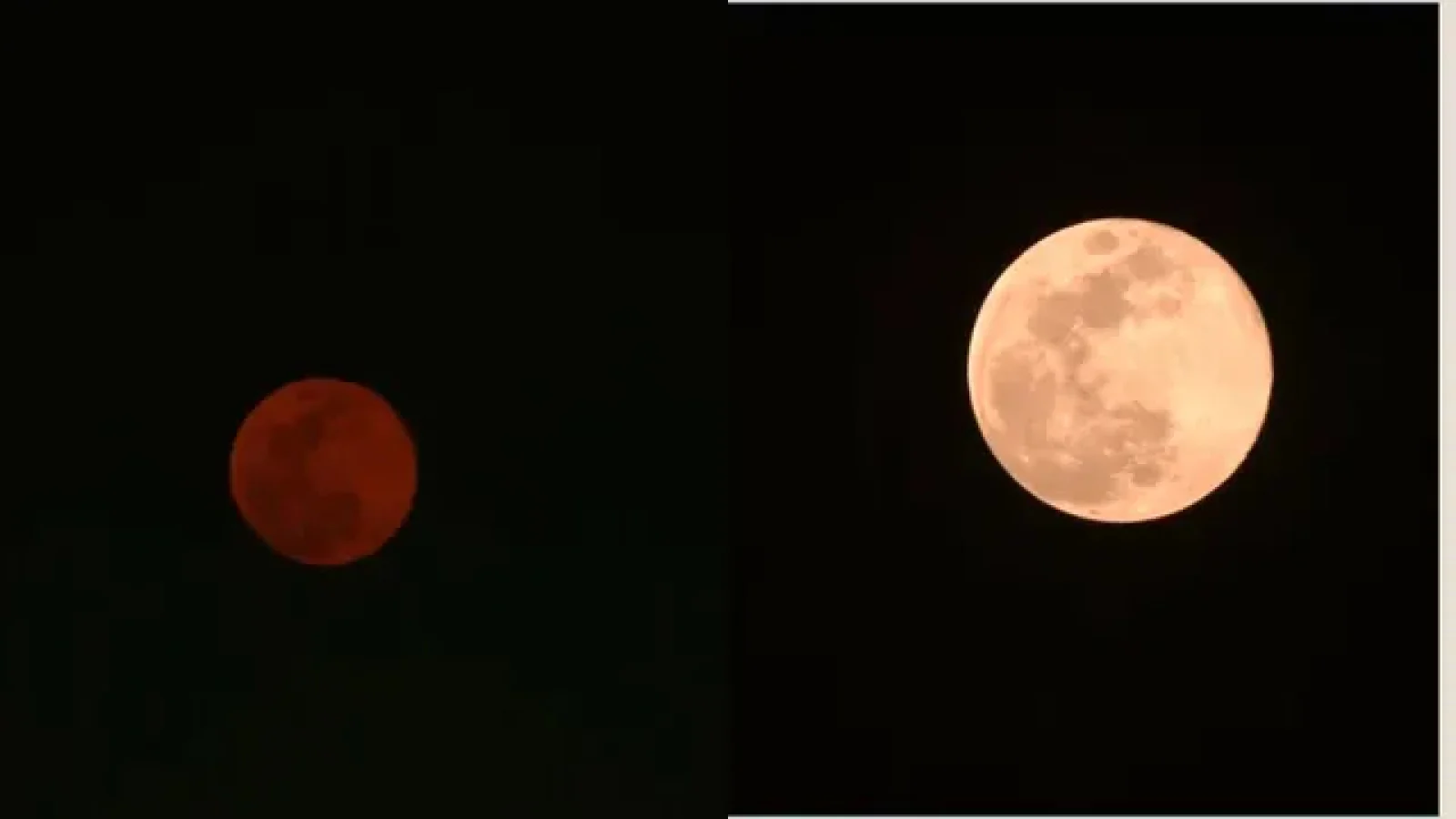

The beginning of this year has witnessed its first supermoon on Saturday. The moon, observed during the full moon in January every year, is known by another name: "Wolf Moon". The Supermoon is 30% brighter and 14% larger than the regular full moon. This occurs because of another phenomenon known as full illusion. The Supermoon is observable from Lucknow, as well as other cities around the country. The Supermoon appeared after sunset on Saturday.
It was noticed in the capital, Delhi, around 6 pm, and it reached its peak around 7 pm. It will remain shining the whole night. The rising of the moon in Lucknow was low in the sky, with the orange-yellow color evident.
A similar sight was witnessed in Guwahati, Bhubaneswar, and Kolkata. Compared to the hustle and bustle of cities, the view from villages, forests, or high rooftops was even more spectacular. Many astronomy enthusiasts were seen enjoying the spectacle without any special equipment. Others also viewed this breathtaking sight through telescopes. People shared photos and videos of the shining moon on social media.