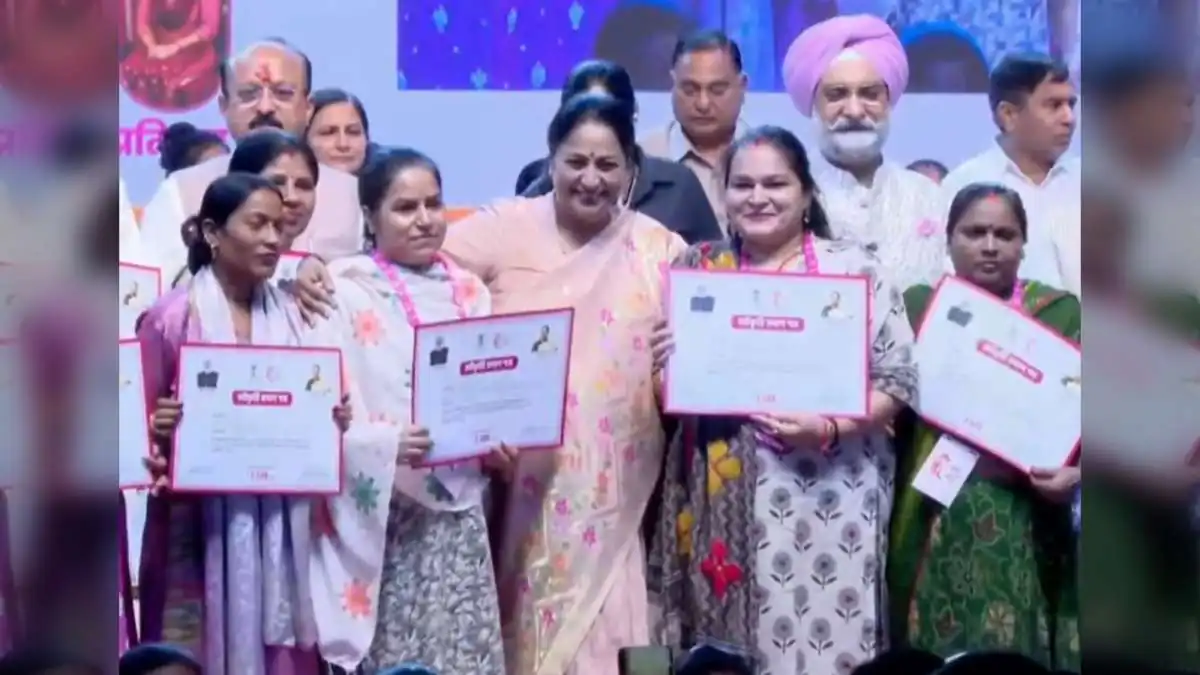
Delhi took a decisive step towards structural women-focused welfare on Wednesday as Chief Minister Rekha Gupta officially launched the 'Delhi Lakshmi Yojana' — a scheme designed to deliver Rs 2,500 in monthly financial assistance to eligible women in the national capital, directly into their bank accounts through Direct Benefit Transfer (DBT). The launch marked the operational rollout of one of the most significant women-focused financial support schemes announced in Delhi in recent years, and one that has already generated massive registration momentum among the city's female population.
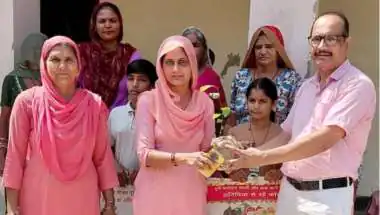
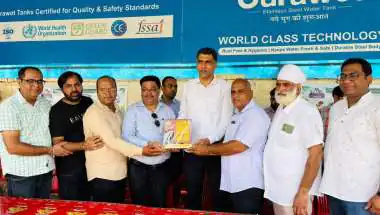
At the launch event, CM Rekha Gupta distributed verification and approval letters to thousands of women beneficiaries and formally initiated the process for transferring the monthly assistance into their accounts. She used the occasion to extend her Raksha Bandhan greetings to women across the city, framing the launch as a festival-timed act of gratitude, celebration and support.
'Delhi Lakshmi Yojana Has Reached Every Doorstep'
Reflecting on the significance of the moment, the Chief Minister said, "This Delhi Lakshmi Yojana, which has reached the doorsteps of all my sisters across Delhi today — for this, while expressing my deepest gratitude from the bottom of my heart to the Prime Minister Narendra Modi, to that mother, and to all of you, I wish you all the very best for your future." Her framing positioned the scheme not as a bureaucratic welfare rollout, but as a personal delivery of a promise to Delhi's women.
The Registration Response: A Powerful Signal
The scheme has evidently struck a chord with Delhi's women. "We launched this scheme on August 1; since then, 9,22,000 sisters have registered their names under this scheme. Today, under this Rs 2,500 monthly Delhi Lakshmi Yojana, we have officially handed over verification and approval certificates to the first 2,500 sisters, who are the initial beneficiaries to receive the benefits of this scheme," she said. That kind of registration response — more than nine lakh women within weeks — is a powerful signal of latent demand for direct financial support among Delhi's women.
The Bigger Picture: Empowerment as a Development Foundation
CM Gupta anchored the scheme in a broader philosophical framing. "Prime Minister Narendra Modi always emphasises that if we want to take the country forward, we must empower our women and sisters. Until the woman of a household progresses, prospers, and has her challenges resolved, the nation's problems cannot be solved," she said. That statement places the Delhi Lakshmi Yojana firmly within the wider policy narrative of women-led development that has become a defining pillar of contemporary Indian public policy.
From Beneficiaries: Gratitude and Emotion
Beneficiaries at the launch spoke openly about the emotional and practical significance of the assistance. Describing the moment as personally meaningful, one beneficiary said, "I am very happy. Thank you very much. This has provided me with a huge financial boost before Raksha Bandhan." That immediate connection between the timing of the launch and its practical value in the household financial calendar illustrates the emotional and practical fit of the scheme.
'Now We Are Also Free'
Another beneficiary framed the launch in strikingly aspirational terms, describing it as "a symbol of women's freedom" and adding, "August 15 and January 26 have now arrived for homemakers. Until now, only the breadwinners were free; now we are also free. This will provide us with significant financial support." That quote captures perhaps the most powerful sentiment surrounding the scheme — the assertion that financial independence is a core dimension of freedom itself.
The Political Fulfilment Layer
BJP MLA Anil Goyal, speaking to IANS during the event, framed the launch as the delivery of an election-time commitment. "Today, Chief Minister Rekha Gupta gave certificates to thousands of women, and now a monthly assistance of Rs 2,500 will be sent through Direct Benefit Transfer (DBT). This was the 'Modi Guarantee' given during the elections, when the government was being formed in Delhi, and today that guarantee is being fulfilled. This proves that there is no difference between the BJP's words and actions," Goyal said. In political terms, this framing positions the scheme as evidence of promise-to-action follow-through.
The Scheme's Design: Direct, Digital, Dignity-Preserving
At an operational level, the Delhi Lakshmi Yojana carries several design strengths worth noting. First, its use of Direct Benefit Transfer ensures that the assistance reaches beneficiaries directly — minimising leakages and intermediaries. Second, the certificate-based verification framework provides a formal, documented record of eligibility. Third, the size of the monthly assistance — Rs 2,500 — is meaningful enough to make a tangible difference in household financial cycles, particularly for lower-income women.
Why It Matters: The Rise of Direct Cash Transfer to Women
The Delhi Lakshmi Yojana is part of a growing trend across India where state governments are directly transferring monthly financial assistance to women. From Madhya Pradesh's Ladli Behna Yojana to Karnataka's Gruha Lakshmi to Maharashtra's Ladki Bahin Yojana, this model is fast becoming a defining feature of state-level welfare architecture. The scheme's launch in Delhi essentially places the national capital firmly within this important policy conversation.
Industry Impact: A Boost for Household Consumption
Beyond its direct welfare role, monthly direct cash transfers to women often have measurable multiplier effects on household consumption. Women recipients tend to reinvest such assistance in food, education, health, hygiene products, children's needs and small savings — categories that benefit local retail, FMCG, healthcare providers and educational service ecosystems. Over time, the aggregate consumption effect of large-scale schemes like this can shape entire local economic patterns.
Financial Literacy and Digital Inclusion Ripple Effects
Every direct cash transfer scheme also carries indirect but significant impacts on financial literacy and digital inclusion. Women beneficiaries who may not previously have interacted routinely with their bank accounts, mobile banking systems or digital financial products often become more actively engaged with financial infrastructure through such schemes. That, in turn, strengthens their long-term financial confidence and economic participation.
The Homemaker Dimension: Recognising Unpaid Work
An important structural insight behind schemes like the Delhi Lakshmi Yojana is the recognition of the enormous unpaid economic contribution made by homemakers. Traditionally invisible in formal economic metrics, this contribution is now beginning to receive some measure of formal recognition through direct financial support. That subtle but important shift in policy framing carries deep implications for how women's economic roles are valued and understood in Indian society.
The Raksha Bandhan Timing
Launching the scheme in the run-up to Raksha Bandhan gives it an added emotional layer. Rakhi is traditionally a moment when brothers commit themselves to the protection and support of their sisters. A scheme rolled out at exactly this moment, delivering direct financial assistance to women, resonates with the emotional symbolism of the festival — positioning the state itself as an active partner in that promise of support.
Audience Sentiment: Warmth and Anticipation
Public sentiment around the launch has been visibly warm — particularly among women across income groups. The scale of the registration numbers, the emotional testimonials of beneficiaries, and the visible enthusiasm at the launch event all point to a scheme that appears to be arriving in tune with what a large section of Delhi's women want. In welfare policy, that resonance between design and demand is often the single strongest indicator of long-term impact.
Why It Matters: The Political Economy of Women-Focused Welfare
The launch of the Delhi Lakshmi Yojana also reflects a broader political economy trend — the increasing recognition, across political parties and states, that women-focused welfare is both socially transformative and politically consequential. Women voters have emerged as a decisive electoral demographic in many states, and schemes that meaningfully improve their financial autonomy have proven to build enduring political goodwill. Delhi's launch fits squarely within this broader trend.
The Governance Framework: Delivery Will Be Key
While the launch is a strong moment of intent, the long-term success of the Delhi Lakshmi Yojana will depend heavily on execution. Efficient verification processes, timely monthly transfers, robust grievance redressal mechanisms, transparent eligibility processes and continuous digital infrastructure support will all be critical. Every one of these operational layers must function reliably for the scheme to sustain the enthusiasm it has generated in its initial weeks.
The Bigger Picture: Financial Autonomy as Empowerment
At its core, the Delhi Lakshmi Yojana is built on a specific philosophical foundation — that financial autonomy is one of the most essential dimensions of women's empowerment. When women have independent access to money, however modest, they gain greater choice, greater dignity, greater bargaining power within their households and greater social confidence. Every rupee that lands in a woman's own bank account is a small but real assertion of her economic identity.
Impact on Women's Everyday Lives
For beneficiaries, the Rs 2,500 monthly assistance can meaningfully shape everyday realities — from paying for children's school essentials to purchasing household necessities, from managing occasional medical needs to setting aside small savings. Over months and years, these small choices compound into significant improvements in household stability, women's decision-making authority, and long-term economic security.
Why It Matters: Building Trust Between State and Citizen
Direct benefit transfer schemes also strengthen the everyday relationship between the state and its citizens. When women receive assistance directly, reliably and transparently, it creates trust in governance systems that goes far beyond the immediate financial amount. That kind of citizen trust is one of the most important, if invisible, foundations of democratic governance.
What Comes Next
Attention will now turn to the operational rollout of the scheme in the coming months. Key elements to watch include: the pace of onboarding of remaining registered beneficiaries, the smoothness of monthly DBT flows, the effectiveness of grievance redressal for eligibility disputes, awareness-building for eligible women not yet registered, and continuous refinement of the scheme's design based on ground-level feedback.
The Bigger Picture: A Long-Term Policy Investment
If executed consistently, the Delhi Lakshmi Yojana has the potential to become one of the more transformative women-focused welfare interventions the national capital has seen. Its scale, direct-transfer design, symbolic timing and clear political ownership all combine to give it a strong starting foundation. The next few months will offer the real test — whether the promise of the launch translates into the reliability of a mature, dependable, systemically embedded welfare architecture.
The Bottom Line
The launch of the Delhi Lakshmi Yojana marks a significant moment in the national capital's welfare journey. With Rs 2,500 in monthly financial assistance now flowing directly into the bank accounts of eligible women, and with more than 9.22 lakh women already registered in a matter of weeks, the scheme reflects both strong policy intent and strong public demand. CM Rekha Gupta's framing — that until women progress, the nation's problems cannot be solved — captures the deeper philosophical foundation of the scheme. Combined with the emotional timing of Raksha Bandhan, the direct-to-account delivery model, and the enthusiastic response from beneficiaries, the Delhi Lakshmi Yojana emerges as more than a welfare announcement. It is a public commitment to financial autonomy, a recognition of women's economic identity, and a small but powerful reminder that empowerment, in the end, is not a slogan but a practice — one that begins with dignity, is measured in trust, and grows, month after month, in the quiet strength of women who now have a little more control over their own lives.
Also Read: 2.65 Lakh Women Register for Delhi Lakshmi Yojana






































.jpg)