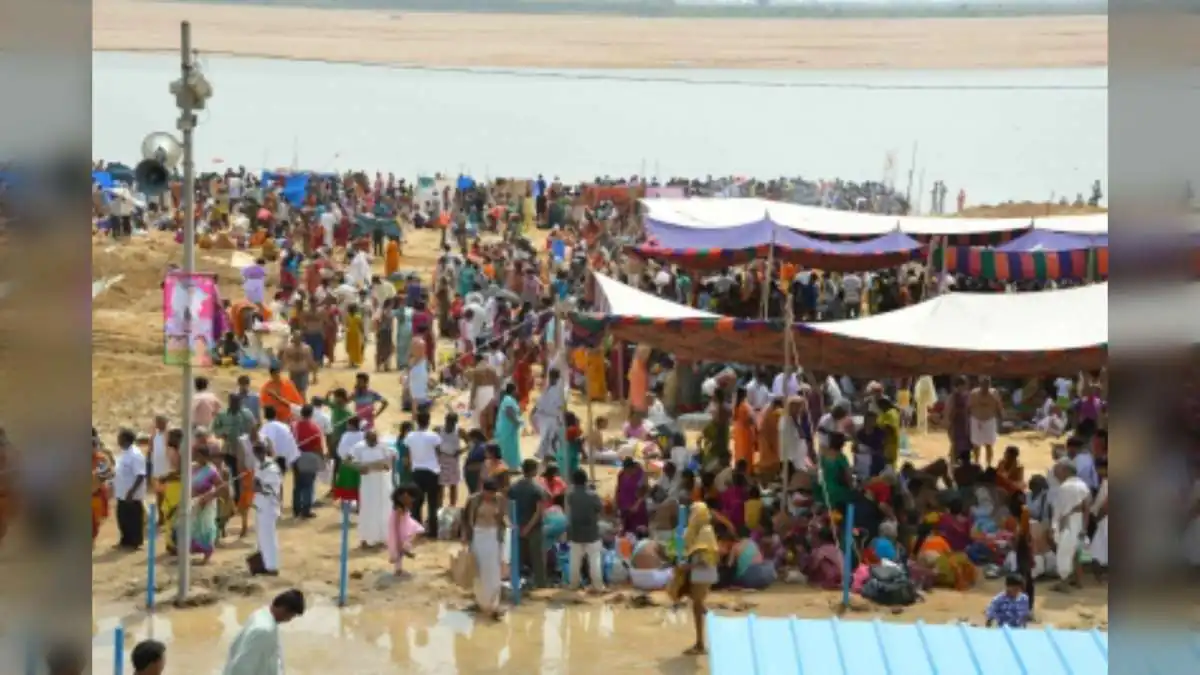
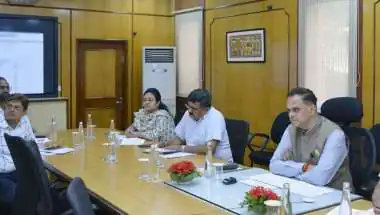
Andhra Pradesh is gearing up to host what will be one of the most colossal religious congregations anywhere in the world — the Godavari Pushkaram 2027. Officials confirmed on Tuesday that an estimated 8 to 10 crore devotees are expected to attend the event, which is scheduled to begin on June 26 next year. Chief Minister N. Chandrababu Naidu, reviewing progress at the Secretariat, has directed officials to make arrangements on a grand scale and ensure that devotees face no inconvenience during the pilgrimage. In practical terms, this is a state-wide mobilisation exercise on a scale rarely attempted anywhere.
The scale of the preparation is reflected in its financial footprint. Officials informed the Chief Minister that preparations worth Rs 4,026 crore are currently underway to make the Pushkaram a globally recognised religious and cultural event. Of this, the Finance Department has already allocated Rs 899 crore. Multiple departments — including Municipal Administration, Roads & Buildings, Water Resources, Energy and Panchayat Raj — are undertaking major works across the pilgrimage circuit.
Scale of Attendance: A Steep Rise From 2015
The scale of expected participation is significantly larger than last time. Around 4.86 crore devotees had taken a holy dip during the 2015 Maha Pushkaram. For 2027, nearly one crore devotees are expected to take dips each day, adding up to a cumulative figure that could touch 10 crore. That kind of daily footfall places extraordinary pressure on logistics, sanitation, transport, medical support, communications and, most importantly, safety infrastructure.
AI, Drones and QR-Based Systems Enter the Pushkaram Playbook
To manage such an unprecedented human tide, officials confirmed that Andhra Pradesh will deploy advanced technologies for both safety and crowd management. The plan includes AI-based crowd analytics, CCTV monitoring, drone surveillance, QR-based vehicle identification and decentralised deployment systems. This technological layer is not just an upgrade over traditional methods — it is a fundamental shift towards data-driven, real-time crowd management for religious congregations of scale.
District-Wise Development: A Layered Investment Map
The construction and development pipeline is being executed across multiple districts along the Godavari basin. Works worth Rs 1,869 crore will be undertaken in East Godavari, Rs 625 crore in West Godavari, Rs 1,501 crore in Konaseema, Rs 426 crore in Eluru, Rs 321 crore in Kakinada, and Rs 190 crore in Polavaram district. That geographical spread ensures that no single district bears the full burden of hosting the pilgrimage, while enabling all riverfront communities to participate in its economic and cultural benefits.
440 Ghats: Ready or Being Built
Given the scale of daily bathing rituals during Pushkaram, the state has prioritised its ghat infrastructure. A total of 440 ghats are being planned — 259 existing ghats will be significantly developed, while 181 new ghats will be newly constructed. District-wise, these include 82 in East Godavari, 40 in West Godavari, 175 in Konaseema, 44 in Eluru, 88 in Kakinada and 11 in Polavaram. The sheer number of ghats reflects the state's understanding that decentralising crowd density is essential to prevent stampede-like conditions and ensure devotee safety.
A Tourism Circuit Around the Pilgrimage
Recognising the potential for a broader spiritual tourism ecosystem, CM Naidu also directed officials to develop a tourism circuit that connects several prominent religious destinations in the region. This includes the Shakti Peetham at Pithapuram, the four Pancharama temples, Dwaraka Tirumala, Annavaram, Vadapalli and Antarvedi. The vision is clear — devotees travelling from across India and abroad to attend the Pushkaram should also have the opportunity to enjoy a full spiritual travel arc across Andhra Pradesh's storied temple heritage.
Homestays, Hotels and Ease of Approvals
The tourism strategy goes beyond destination development. Naidu urged the promotion of homestays across the Godavari region and asked officials to provide speedy approvals for hotel projects. This dual approach — expanding both formal hotel capacity and community-run homestay hospitality — is aimed at absorbing a projected massive influx of pilgrims and tourists without overwhelming existing infrastructure. It is a strategy that other Indian states, from Uttarakhand to Kerala, have successfully deployed for large-scale spiritual tourism events.
A Convention Centre in Rajamahendravaram
To further amplify the region's ability to host major cultural and religious events, the Chief Minister has directed the construction of a convention centre in Rajamahendravaram. Once ready, the centre is expected to become a venue for cultural programmes, spiritual discourses, thematic exhibitions and dignitary hosting events during the Pushkaram. Beyond the immediate event, the convention centre will serve as a long-term infrastructure asset for the region.
The Global Outreach
Underscoring the scale of ambition, Naidu asked officials to invite prominent personalities from across the country and abroad to attend the Pushkaram. This international outreach is not merely ceremonial — it positions the Godavari Pushkaram as an event with global spiritual and cultural resonance, deepening Andhra's soft power presence on both the national and international stage.
Why It Matters: The Logistics of Faith at Continental Scale
Godavari Pushkaram is not just a religious event — it is one of the most logistically demanding public gatherings the world sees. Handling nearly one crore devotees a day requires a state-wide alignment of resources across sanitation, water, transport, healthcare, law enforcement, waste management, communications, media and public information systems. Every element of preparation, from ghat construction to AI crowd analytics, plays a role in ensuring that faith and safety coexist seamlessly.
Industry Impact: A Massive Multi-Sector Boost
The economic impact of the Pushkaram is set to be substantial. Hospitality, transport, food and beverage, retail, real estate, construction, security services and communication infrastructure are all expected to benefit from the mobilisation. The Rs 4,026 crore preparation outlay itself acts as a large-scale stimulus package for the districts along the Godavari basin, generating employment and driving local business activity well before the event begins.
Technology Meets Tradition: A New Standard for Indian Pilgrimages
The deployment of AI-based crowd analytics, drone surveillance and QR-based systems marks an important evolution in how India manages its largest religious congregations. If executed effectively, the Godavari Pushkaram 2027 could set a new benchmark for how technology can be harnessed to enhance the safety and experience of large-scale pilgrimages — a template that other states and religious authorities are likely to study closely.
Safety First: Learning From the Past
Large religious gatherings in India have, historically, been shadowed by concerns around stampedes and crowd-related incidents. The heavy focus on decentralised deployment systems, expanded ghat infrastructure, drone surveillance and AI-driven analytics reflects a clear intent by the Andhra government to minimise such risks. This proactive investment in safety infrastructure is arguably the most important underlying story of the 2027 preparation.
Cultural and Spiritual Significance
The Godavari Pushkaram holds deep spiritual significance for millions of Hindus. Believed to purify body and soul, a Pushkaram dip in the Godavari is regarded as a rare and blessed opportunity, held only once every 12 years. The event brings together devotees not only from Andhra Pradesh and Telangana, but also from Maharashtra, Karnataka, Tamil Nadu, other Indian states, and increasingly, the diaspora. That emotional pull is precisely why any organisational lapse would carry deep public consequence.
Audience Sentiment: Excitement Meets Expectation
For citizens of Andhra Pradesh, and Godavari's riverside communities in particular, the announcement has generated strong excitement. The event is not only a spiritual milestone but also an economic and cultural celebration for entire districts. Simultaneously, expectations are also high — devotees will expect basic amenities, safety, sanitation and easy access to ghats to be delivered flawlessly across a 10-crore-strong pilgrim arc.
Why It Matters: Andhra's Positioning on the Spiritual Tourism Map
The 2027 Godavari Pushkaram is not just about a river festival. It is a strategic opportunity for Andhra Pradesh to significantly upgrade its spiritual tourism positioning — placing the state alongside destinations like Varanasi, Haridwar, Rishikesh and Puri in the global consciousness of Hindu pilgrims. A well-executed Pushkaram could translate into sustained long-term tourism inflows well beyond the event itself.
The Bigger Picture: Governance Meets Faith
Ultimately, the Godavari Pushkaram 2027 is a live test case for the modern Indian state's ability to organise faith at scale. It brings together infrastructure, technology, tourism, safety, cultural sensitivity and administrative execution into a single coordinated effort. The Naidu-led government's approach — proactive, technology-forward and geographically decentralised — reflects a maturing understanding of how such mega-events must be managed in the 21st century.
The Countdown Begins
With just 10 months remaining, the coming period will be crucial. Ghat construction must move at speed, transport corridors must be strengthened, hotels and homestays must be onboarded at scale, technology systems must be tested end-to-end, and communication frameworks must be prepared to guide millions of devotees. The Chief Minister's directive to expedite works signals a firm intent that the state is aiming to have every element ready well before the pilgrimage begins.
The Bottom Line
The Godavari Pushkaram 2027 is shaping up to be more than just a religious observance — it is a full-scale showcase of Andhra Pradesh's ability to blend spirituality, technology, infrastructure and hospitality at an unprecedented scale. When the Godavari begins receiving its devotees on June 26 next year, the world will be watching not only the sacred rituals unfolding along its banks, but also the extraordinary organisational feat behind them. If executed as envisioned, it will not just be a festival — it will be a defining moment for Andhra Pradesh's cultural, spiritual and administrative identity, and one of the largest, safest and most technologically enabled pilgrim gatherings the world has ever seen.







































.jpg)