T.S. Ningamma of Bengaluru is having a week she will remember for the rest of her life. A small-time vendor who once served food on a single table outside her home, Ningamma is now one of the faces of a national empowerment story — her transformational journey featured directly in Prime Minister Narendra Modi's 137th 'Mann Ki Baat' address on Sunday. In an emotional and grounded conversation with IANS, she opened up about how a series of PM SVANidhi loans quietly reshaped her family's entire trajectory — from financial hardship to steady growth, from struggle to hope.
For years, Ningamma and her family lived in constant financial hardship. Every day was about somehow keeping the household running while dreaming of a small, stable business that could support them.
"Before taking the loan, I didn't have anything to start the shop. I was making things with the utensils I had at home and putting them on a table," Ningamma told IANS.
That single sentence captures the humility of where the story begins — a woman with nothing more than utensils from her own kitchen and a table set outside, quietly trying to build something.
The First Loan That Changed Everything
The first breakthrough came with a Rs 10,000 loan from PM SVANidhi. Small in absolute terms, transformative in impact.
"I took a loan of Rs 10,000. With that Rs 10,000, I bought a cart and utensils. I kept improving, paid my children's school fees, and then I got Rs 20,000. With that Rs 20,000, I improved further, hired some workers and expanded," she added.
That step-by-step arc — from Rs 10,000 to Rs 20,000 to Rs 50,000 — reflects exactly how the PM SVANidhi scheme is designed to work. Successive loan cycles, each one enabling the next stage of scale, allow small vendors to grow at their own pace without falling into unsustainable debt.
Full Growth Journey
Summing up what those loans made possible, Ningamma offered a beautifully compact overview of her progress.
"We have benefited a lot. We took loans of Rs 10,000, Rs 20,000 and Rs 50,000. With that, we improved the shop, educated our children and have been managing our lives," she said.
Every one of those milestones — a better shop, educated children, a stable everyday life — represents the invisible dividends that a well-designed credit scheme can unlock for families that traditional banking systems have historically underserved.
The Mann Ki Baat Moment
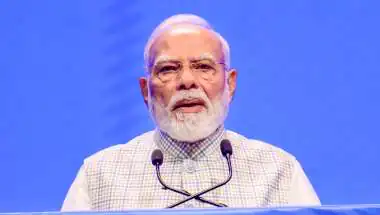
The national recognition came on Sunday, when PM Modi cited Ningamma's story in his monthly address. Highlighting her transformational journey, PM Modi said she upgraded her cart with assistance from PM SVANidhi and added a variety of items to the menu.
"As customers and earnings increased, the family's financial situation improved. Today, she can provide a better education for her three children," the Prime Minister noted.
He added a broader observation about the multiplier effect of women-led enterprises: "When a woman's business grows, the future of her entire family advances along with it."
Ningamma's Reaction to the National Shoutout
Speaking about being mentioned in Mann Ki Baat, Ningamma didn't try to hide her emotion.
"I am very happy, very happy, and it's a great honour for me as well as the family that the Prime Minister acknowledged our endeavour," she said.
She also shared how the news landed at home. "More than anyone else, my brother, my sister-in-law, my father and my mother are very happy," she added.
That familial joy captures something essential about India's small-business economy. Behind every vendor, cart or shop lies an entire family whose sense of pride, security and possibility rises and falls together.
About the PM SVANidhi Scheme
The PM SVANidhi scheme was launched in June 2020 as a first-of-its-kind micro-credit initiative focused specifically on street vendors, with government-backed credit guarantee support. It was designed to give India's most vulnerable and underserved category of self-employed workers — the street vendors — formal access to credit, at a time when the COVID-19 pandemic had disrupted their livelihoods.
Today, the scheme has evolved far beyond a simple loan programme. It has become a nationwide movement advancing financial empowerment, digital inclusion and social security for millions working in the informal economy.
Why It Matters
Street vendors form one of the largest and most consequential parts of India's urban economy. They operate everywhere — outside metro stations, at temple gates, in market lanes, near office complexes, at bus stands. They serve millions of Indians every single day. And yet, for decades, they have often existed outside the formal credit ecosystem — unable to access working capital, unable to scale, unable to protect themselves against sudden shocks.
PM SVANidhi has, quietly and structurally, begun to change that. By providing formal, low-cost, incrementally scaling credit, the scheme has enabled thousands of vendors — like Ningamma — to move from precarious survival to stable growth.
The Women's Empowerment Angle
Ningamma's story is also part of a broader pattern that PM Modi emphasised in his Mann Ki Baat address. Women now account for approximately 46 per cent of the beneficiaries of PM SVANidhi — around 35 lakh women across India using the scheme to grow their small businesses.
When women are the ones accessing capital, using it well, and scaling their ventures, the impact often spreads across the entire household — better nutrition, better education for children, better financial planning and better long-term stability. Ningamma's ability to educate her three children after the loans is one of the clearest embodiments of that pattern.
Cultural Impact
Stories like Ningamma's carry meaningful cultural weight. In a media environment often saturated with big-scale narratives and celebrity news, hearing about a Bengaluru vendor whose life changed through Rs 10,000, Rs 20,000 and Rs 50,000 grounded loans reminds audiences of the everyday nature of Indian entrepreneurship. Behind every headline about India's economic rise lies thousands of stories like hers — small, personal, quietly transformative.
For younger women, students and aspiring first-generation entrepreneurs, her example is a lesson in patience and self-belief. She didn't start with capital, mentorship or a business plan. She started with utensils and a table. The rest came step by step.
Industry and Institutional Impact
For India's microfinance ecosystem, banks and public financial institutions delivering PM SVANidhi loans, stories like Ningamma's validate the ground-level effectiveness of the scheme. They also serve as reference points for scaling similar interventions across other underserved segments of the informal economy.
For state and central government agencies working on financial inclusion, the message is clear: small, well-designed credit interventions, delivered directly to vulnerable groups, can produce outsized, generational impact.
The Bigger Picture
T.S. Ningamma's journey from a table outside her home to a growing family food business — and now to being named directly by the Prime Minister of India — is exactly the kind of story that shows what quiet, structural empowerment can achieve. It didn't take a spectacular intervention. It didn't require an entrepreneurship bootcamp. It simply required trust — the trust of a government scheme that believed she could grow, and the trust of a family that stood beside her.
For Bengaluru, Ningamma is now a source of local pride. For millions of Indian women running small enterprises across the country, she is proof that opportunity often begins with something as small as Rs 10,000 — if the system is designed to see them, back them and grow with them. And on Sunday, from a monthly radio address that reaches every corner of the nation, one of India's most-heard voices ensured that her story was heard exactly where it needed to land — in the hearts of millions of Indians who now know that Bengaluru's Ningamma is walking the very journey they themselves might be capable of.







.jpg)


























.jpg)