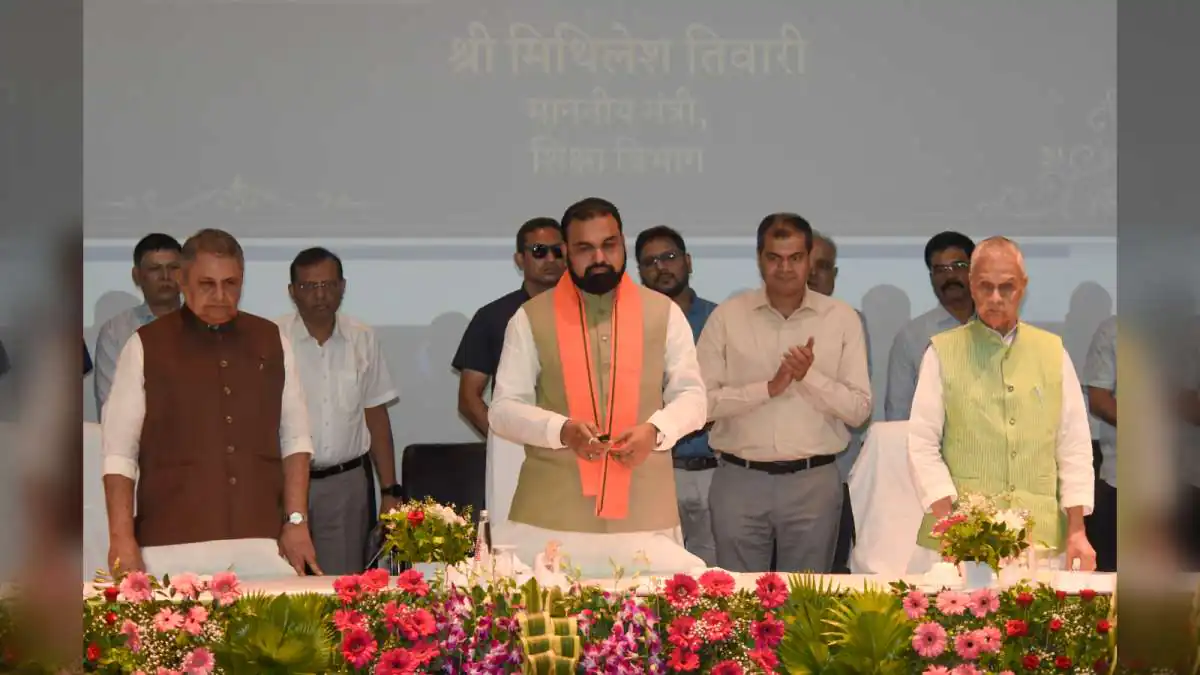
Bihar Chief Minister Samrat Chaudhary on Thursday delivered one of the most significant policy announcements of his tenure — the establishment of a women-only university in the state, where every position, from students and teaching staff to the Vice-Chancellor, will be held by women. The announcement, made at the launch of the 'Samriddh Mahila-Samriddh Bihar' (Prosperous Women-Prosperous Bihar) campaign at Bapu Sabhagar in Patna, is being positioned as a landmark structural intervention in the state's women-empowerment journey.
CM Chaudhary said the proposed institution will create new opportunities for women in higher education and leadership, while contributing meaningfully to Bihar's overall development. The idea of a university where every role — academic, administrative and governance-level — is occupied by women is rare in India, and if executed as promised, would place Bihar among the most ambitious states in the country on female leadership in higher education.
A Two-Decade Transformation Story
Chaudhary framed the announcement within a broader narrative of Bihar's evolution. He said the transformation of Bihar that began after 2005 has continued over the past two decades, driven in significant measure by women-focused initiatives.
He recalled the launch of the Jeevika programme in 2005-06 as a foundational moment. Women associated with the initiative, he said, had made a major contribution to Bihar's economy. His claim was striking in scale — Jeevika Didis, according to Chaudhary, have contributed approximately Rs 1.46 lakh crore to Bihar's economy. That figure alone reframes the conversation about grassroots women's collectives from a welfare narrative to an economic one.
'When Women Have Confidence, Families Transform. When Lakhs Have It, Bihar Transforms'
Chaudhary was clear about the philosophical underpinning of the government's agenda. Greater self-confidence among women, he said, transforms families — and the growing empowerment of lakhs of women has the potential to transform Bihar itself. He also pointed to women's rising participation in traditionally male-dominated sectors, including the police force, as visible proof of that shift.
Solar Panels for 10 Lakh Jeevika Didi Homes
One of the most tangible policy commitments made at the event was the plan to link the homes of approximately 10 lakh Jeevika Didis with solar energy under the Pradhan Mantri Surya Ghar Yojana. Solar panels will be installed at eligible households, with the government expecting the initiative to substantially reduce household electricity expenditure and potentially create additional income opportunities through solar power generation.
The move is significant because it merges two policy priorities — clean energy and women's economic self-reliance — into a single delivery mechanism.
A Reservation Framework Already in Place
Chaudhary also reiterated the state's existing structural provisions for women. Bihar continues to offer 35 per cent reservation for women in government jobs and 50 per cent reservation in Panchayati Raj institutions and local bodies — long-standing frameworks that have helped keep the state politically ahead of many others on grassroots female representation.
Programmes That Anchor the Empowerment Push
The Chief Minister also referenced a wide portfolio of ongoing initiatives that together form the state's women-empowerment infrastructure. These include the Women's Employment Scheme, Bihar Ki Beti Startup Challenge, the Chief Minister's PhD Fellowship for Girls, and long-running bicycle and uniform schemes for schoolgirls. Additional initiatives include competitive-examination incentives, Pink Toilets, Pink Buses and free bus travel on special occasions — small but visible interventions that shape daily mobility and safety for women.
Why It Matters
The announcement of a women-only university sits at the top of this ecosystem for a reason. Higher education leadership in India remains overwhelmingly male-dominated, particularly at the level of Vice-Chancellors and academic decision-making bodies. By committing to an institution where every layer of leadership will be female, Bihar is not just creating another university — it is designing a governance experiment in gender parity at the top.
Industry and Social Impact
The ripple effects, if the initiative is delivered on time, could be substantial. A university of this design could become a magnet for female academics from across India, model an alternate governance culture in higher education, and produce a generation of women graduates who have spent their formative years in an environment where leadership looked entirely like them. That has downstream implications for the workforce, for public administration and for social confidence.
The solar rollout for Jeevika Didis carries its own economic potential — creating pathways for micro-entrepreneurship in renewable energy, reducing household expenses and creating leadership opportunities within community networks.
The Bigger Picture
'Samriddh Mahila-Samriddh Bihar' is not just a campaign — it is a positioning statement about how Bihar wants to be seen in the next chapter of its development story. By linking women's empowerment to higher education, clean energy, employment, entrepreneurship and daily-life mobility, the CM is essentially arguing that Bihar's future prosperity is inseparable from the prosperity of its women. With a women-only university on the horizon, that argument is now being written into brick and mortar — not just policy documents.










































.jpg)
.jpg)