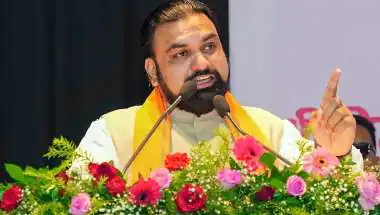
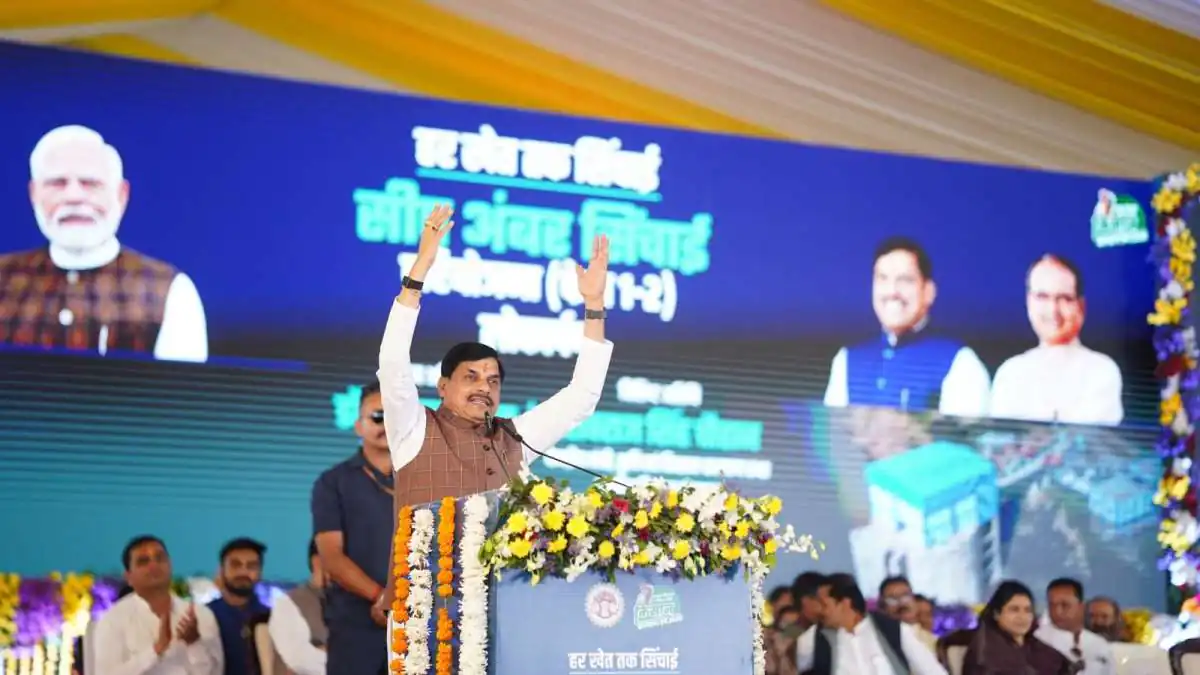
On Friday, Madhya Pradesh Chief Minister Mohan Yadav inaugurated both phases of the Rs 536.23-crore Seep-Amber Micro Irrigation Project in Sehore district. The project is meant to reach farmers in 76 villages. His speech in Bhairunda covered more than the canal and pipe network, though. He described a two-part plan for rural Madhya Pradesh: give farmers reliable water first, then help them earn more from things other than the crop itself.
The Seep-Amber project is expected to strengthen irrigation facilities across the region and give farmers better access to water. The aim is to raise farm productivity and reduce dependence on rainfall. For a farmer whose kharif and rabi plans still depend on whether the monsoon arrives on time, that matters a great deal.
The project is built on micro irrigation, so the focus is on getting water to fields reliably rather than flooding them. When a farmer can count on water, the land can be planned season by season, and a single bad monsoon is less likely to wipe out a year's income.
Union Agriculture and Farmers Welfare Minister Shivraj Singh Chouhan, who hails from Sehore district, joined the programme virtually and addressed the gathering. His presence highlighted the political and administrative weight attached to the district.
The Dairy Bet
The more ambitious part of the speech was about milk. "Madhya Pradesh currently ranks third in the country in milk production, and our target is to bring the state to the first position," Yadav said.
The link between irrigation and dairy is direct. Steady water supports fodder cultivation, and fodder sustains livestock. By putting irrigation and animal husbandry together, the government is presenting the two as connected parts of one rural economy. Yadav said the state is encouraging farmers to diversify their income through activities beyond traditional crop cultivation, with dairy farming and animal husbandry promoted as additional earning sources for rural households.
The logic is easy to follow. If a farming household has a cattle shed alongside its fields, it has a daily cash flow from milk, which cushions it against crop price swings and weather shocks.
The Growth Narrative
The Chief Minister also used the occasion to speak about the state's economic record. "The state government is carrying out development works in every sector. The per capita income of Madhya Pradesh is continuously increasing and has now reached Rs 1.70 lakh," he said.
Beyond the flagship irrigation scheme, Yadav inaugurated and laid foundation stones for development works worth Rs 41.44 crore in Bhairunda development block. That brings the day's announcements for the area well past the Rs 577-crore mark.
What to Watch Next
For the 76 villages, the real test of Seep-Amber will come in the next few crop cycles. Farmers will want to see whether water reaches the farthest fields, whether yields improve, and whether lower dependence on rain actually shows up in household incomes. The dairy target will also be measured against the national rankings in the years ahead.
For now, Sehore shows the template the state appears to be betting on: get water to the fields first, and build a second income from livestock on that foundation.
With inputs from IANS