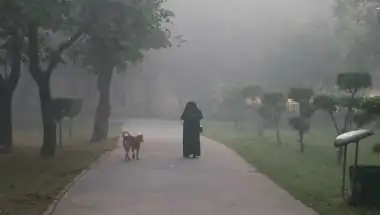
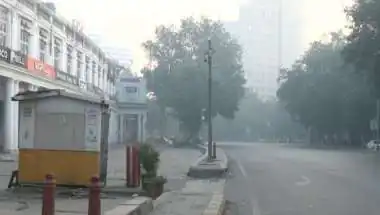
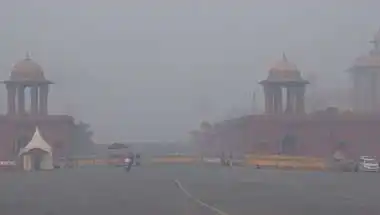
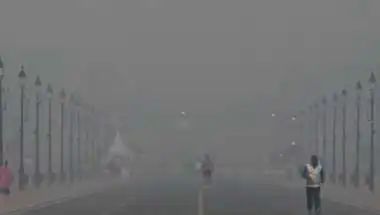
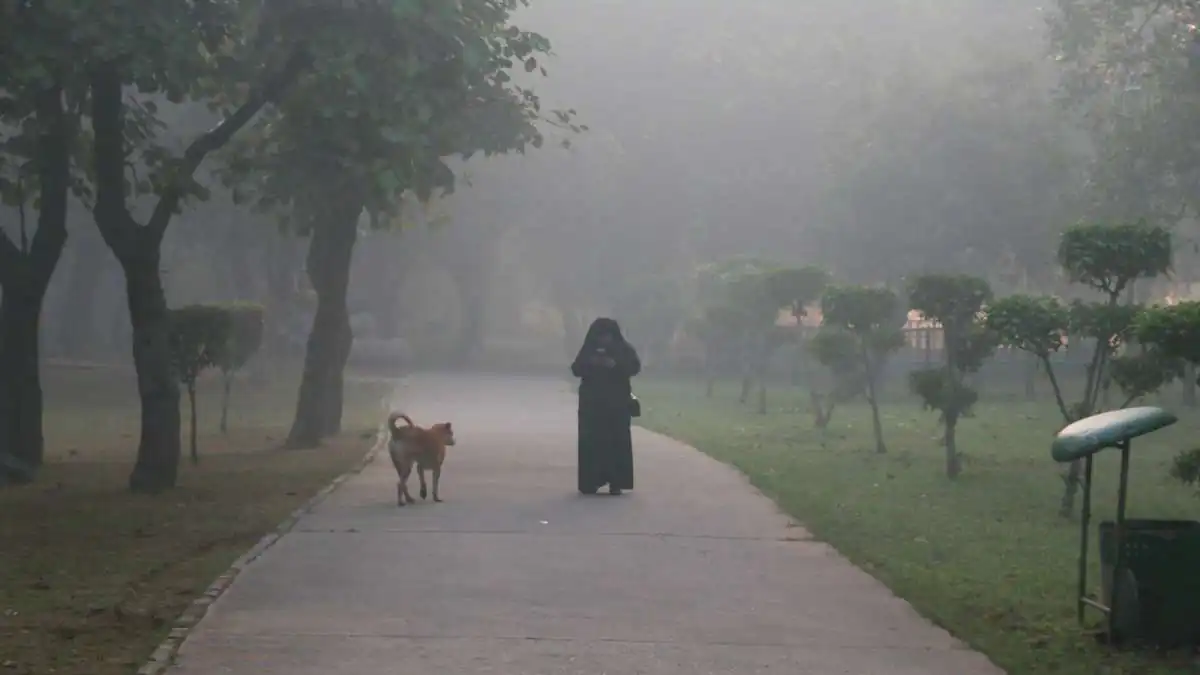
On Saturday morning Delhi woke to fog, haze and air that was already worse than forecast. At 8:20 a.m. the city's Air Quality Index stood at 327, in the "very poor" category. The Indian Institute of Tropical Meteorology (IITM) had expected that slide on Sunday, not Saturday.
The timing matters. In Delhi's winter, cold and pollution feed each other. Friday night was the coldest of the season so far, with a minimum of 10.5 degrees Celsius against 10.6 degrees a day earlier. Colder, still air near the ground acts like a lid that keeps smoke, dust and vehicle exhaust close to where people breathe. Saturday's numbers suggest that lid is already closing.
Readings were high across the city. Sirifort recorded the highest AQI at 368. Chandni Chowk followed at 366, then Commonwealth Sports Complex (362), Punjabi Bagh (360), CRRI Mathura Road (355) and Pusa (353). Nangloi (330), Shadipur (326), Talkatora Garden (316), NSUT Jaffarpur (316) and Vasundhara Enclave (315) were also in the very poor range.
The outskirts were somewhat better but still unhealthy: Karala (296), NIH Narela (285), Chhawla (278), Tikri Kalan (264), Mandir Marg (253), Burari (246) and Ghoga (240).
Sirifort, Pusa, Chandni Chowk and CRRI Mathura Road were also among the worst stations on Friday. A day later their readings were higher still. The same neighbourhoods are getting worse air day after day.
On Friday the city's AQI was 268 around noon and 270 by 4 p.m. That was the sixth straight day in the "poor" category and slightly better than the 280 recorded a day earlier. Favourable ventilation kept every monitoring station out of the "severe" category. Saturday showed how quickly that relief can go.
What the weather holds
According to the India Meteorological Department (IMD), temperatures may rise slightly on Saturday and then fall by about 2-3 degrees Celsius over the following days. Skies should stay mostly clear. The IMD also flagged a western disturbance in the middle tropospheric levels, about 5.8 km above sea level, that could cause temperatures to fluctuate.
IITM expects unfavourable meteorological conditions to slow the dispersal of pollutants into Sunday. For commuters, outdoor workers and families with elderly members or young children, the next few days are likely to be harder.
The policy picture is mixed. The construction ban that the Commission for Air Quality Management (CAQM) imposed across the NCR from November 5 to 20 was lifted on Friday, just as conditions began to worsen. The Delhi government's separate winter pollution-control framework stays in force until January 31, and stricter measures are due from December 10. Stage I and II of the Graded Response Action Plan (GRAP) also continue across Delhi-NCR. CAQM's October 30 order separately covers dust-generating demolition, outdoor construction and physical office attendance.
The government has listed its own measures: 108 Mechanical Road Sweeping (MRS) machines deployed across the National Capital Territory, nearly 80 lakh plantation activities, and 1,440.713 km of roads redeveloped. It has also said Delhi's average AQI on October 31 was 166, well below the 223 recorded in the same period last year.
That comparison is useful context, but it reflects early-winter air. The real test is late November through January, when cold, calm weather sets in. With the AQI already above 320 before the forecast predicted it and colder nights ahead, these weeks will show whether the city's measures hold up when conditions are at their worst.
With inputs from IANS