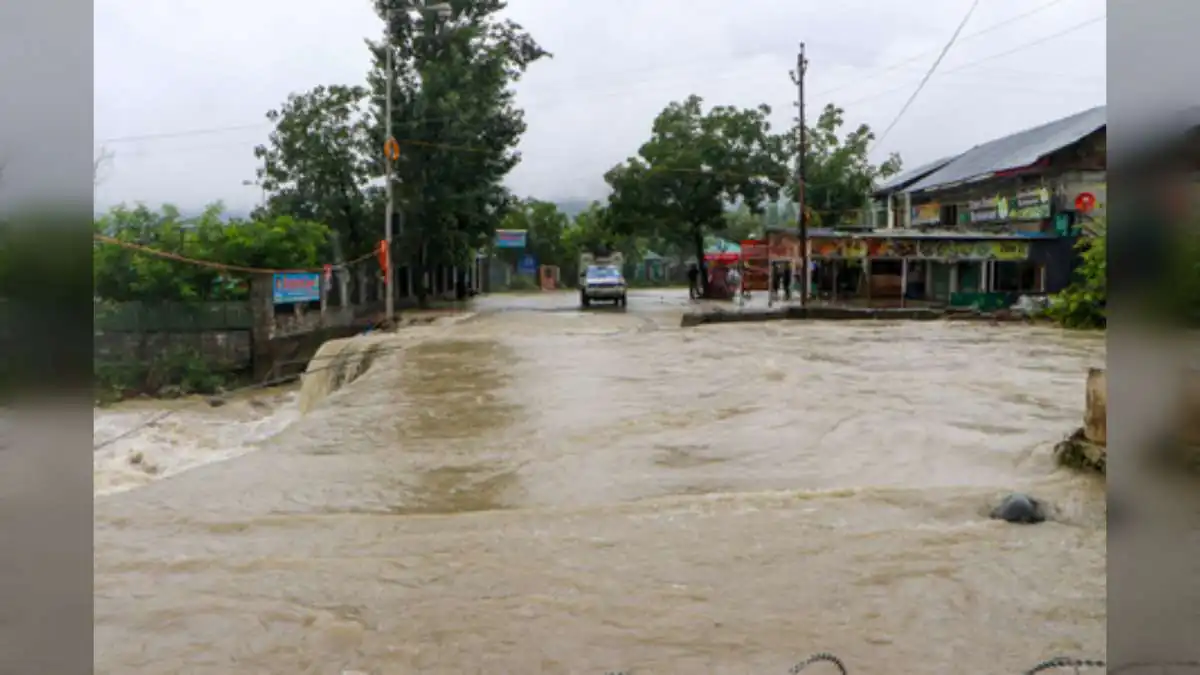
The picturesque hill town of Pahalgam in Jammu and Kashmir woke up to one of its more disruptive weather days of the season on Tuesday. Heavy rainfall lashed the town — one of the most popular tourist destinations in the Kashmir Valley — causing waterlogging at several locations, disrupting normal movement, and swelling the Lidder River to elevated levels. For a town whose economy, ecology and everyday life are deeply intertwined with its natural landscape, Tuesday's rainfall event carried both immediate operational challenges and deeper environmental warning signals.
For residents, visitors and business owners in the town, the day's events were a reminder of just how vulnerable Himalayan hill stations remain to intense weather episodes.
What Happened in Pahalgam
Officials confirmed that heavy rainfall lashed Pahalgam town in Anantnag district on Tuesday, leading to waterlogging at several locations across the town.
Water entered some hotels, shops and even the town's taxi stand — reflecting the intensity of the rainfall and the vulnerability of local urban infrastructure to sudden heavy weather events. Several roads and low-lying areas across the hill station were affected as water accumulated at various locations, disrupting normal movement of both residents and visitors.
For a town that depends heavily on tourism, such disruptions can carry significant economic weight even beyond the immediate operational challenges.
The Lidder River Situation
One of the most closely watched aspects of Tuesday's weather event was the rising water level of the Lidder River.
The Lidder — one of the most important rivers flowing through Pahalgam — remained swollen amid increased water flow following the rainfall. Authorities continued to keep a close watch on the situation as the day progressed.
For anyone familiar with the Kashmir Valley's rainfall dynamics, a swollen Lidder is always a situation that demands vigilance. When mountain rivers rise rapidly following intense rainfall, the impact can quickly extend beyond the immediate area — potentially affecting downstream regions as well.
Wider Weather Pattern Across J&K
Tuesday's rainfall was part of a wider spell of unsettled weather across Jammu and Kashmir. The Meteorological Centre Srinagar had earlier forecast light to moderate rain and thundershowers at several places across the region.
More critically, the weather agency had also warned that intense showers could potentially trigger flash floods, mudslides and landslides in vulnerable areas. That's a serious weather advisory — one that reflects the geographical fragility of many parts of the region and the potential for sudden weather escalation.
Residents and visitors in Pahalgam were advised to remain cautious, particularly near water channels and other vulnerable locations, as further rainfall activity remained possible.
The Alarming Broader Pattern
Tuesday's Pahalgam incident is unfortunately not an isolated event. The Kashmir Valley and the Jammu division have been witnessing an alarming and unusual increase in cloudbursts — triggering flash floods and rising water levels in local rivers and streams over recent times.
That pattern is deeply concerning. Cloudbursts are typically rare, high-intensity weather events. When they begin occurring with increased frequency, they signal broader environmental shifts that demand urgent attention from scientists, policymakers and communities alike.
The Scientific Explanations
Environmental scientists have been increasingly outspoken about what may be driving this concerning pattern.
While climate change is being widely cited as a major contributor, scientists also point to a much more locally rooted cause — the ruthless deforestation and disappearing tree cover in the region's mountains.
Ecologists believe that a dense tree cover in the mountains would help absorb rainfall gradually, slow down the runoff into low-lying areas, and reduce the impact of intense weather events. When mountains are bereft of tree cover, a cloudburst or heavy rainfall in the higher reaches washes down stones, mud and debris with the water — magnifying the destructive impact on communities below.
That's a critical distinction. It suggests that while climate change may be shaping the frequency and intensity of extreme weather events at a global level, the local impact of those events is being amplified significantly by localised environmental degradation.
A Sharp Warning From an Environmental Voice
Environmental scientist Mansha Nisar put the concern in unusually direct terms.
"We are paying the price for so-called development and urbanisation which has been mindless and unbelievably self-destructive," she said.
That's a stark statement — and one that reflects the depth of concern among many scientists and ecologists who have been tracking environmental change in the Himalayan region. It is a reminder that the choices communities and governments make about land use, forest cover, construction and urban planning have direct, measurable consequences for how vulnerable regions like Kashmir become to weather-related disasters.
Why It Matters
Pahalgam is not just any town. It is one of the most iconic tourist destinations in the Kashmir Valley — welcoming lakhs of visitors every year, sustaining thousands of livelihoods, and contributing significantly to the region's tourism economy. Every disruptive weather event in a town like Pahalgam carries wider economic and social ripple effects.
More importantly, however, the incident is a reminder that Himalayan hill stations across India are navigating an evolving climate reality. Rising incidents of cloudbursts, unpredictable rainfall patterns, sudden waterlogging and river swelling are all signs of an ecosystem under pressure.
Community and Business Impact
For residents of Pahalgam, Tuesday's waterlogging brought immediate disruption to daily life. For hotels, shops and taxi operators whose businesses were directly affected by the water ingress, the impact was tangible — with cleanup, repair and business disruption to manage in the days ahead.
For visitors — particularly tourists in town during the incident — the day brought unexpected challenges to their travel plans and safety considerations. Authorities' advisories to remain cautious near water channels are exactly the kind of guidance visitors need to heed carefully during such weather events.
Long-Term Environmental Impact
Beyond the immediate operational challenges, incidents like Tuesday's carry critical long-term signals. They point to the urgent need for coordinated action across multiple areas — including improved weather forecasting infrastructure, stronger urban planning around hill stations, ecological restoration through reforestation initiatives, better drainage infrastructure in vulnerable towns and community awareness programmes on responding to sudden weather events.
For the Himalayan region as a whole, addressing these underlying vulnerabilities will require sustained, multi-decade commitment across governments, scientific institutions, community organisations and citizens themselves.
Institutional Response
For the local administration, weather agencies, disaster management authorities and infrastructure agencies, incidents like Tuesday's underline the importance of maintaining strong preparedness protocols. Real-time monitoring of river water levels. Rapid drainage response in affected urban areas. Timely public advisories through multiple communication channels. Coordinated response mechanisms between tourism, disaster management and civic bodies.
All of these systems are being tested during every weather event — and improvements in any one of them can meaningfully reduce future disruption.
Cultural and Tourism Impact
Pahalgam holds a deeply special place in India's cultural and tourism imagination. Its meadows, rivers, mountains and forests have inspired generations of visitors, poets, filmmakers and photographers. Protecting the natural beauty and ecological health of a place like Pahalgam is not just a local priority — it is a national one.
Tuesday's waterlogging event, while thankfully limited to certain areas of the town, is a reminder that this beloved destination requires active, ongoing environmental care.
The Bigger Picture
Pahalgam's Tuesday rainfall event is more than just a local weather story. It is a small but important entry in a much larger, deeply concerning pattern of increased climate volatility across the Himalayan region — one that combines global climate shifts with localised environmental degradation to produce increasingly frequent and disruptive weather events.
Waterlogging in a hill town. A swollen river. Advisories from the Meteorological Centre. Concerned voices from environmental scientists. Together, these are not just isolated data points. They form part of a much larger story that policymakers, scientists, communities and citizens across India are being asked to engage with more seriously with each passing year.
For Pahalgam's residents and businesses, the immediate priority is recovery from Tuesday's disruption and preparation for any further weather events in the coming days. For visitors currently in the area, the priority is safety and adherence to official advisories. For the region's institutional systems, the priority is maintaining strong weather monitoring, response and communication protocols.
But for all of us — as citizens, as consumers, as voters, as people who love the Himalayas — the priority runs deeper. It is about supporting the kind of long-term ecological restoration, sustainable urban planning and climate action that can help ensure that the beloved hill stations of India remain safe, beautiful and welcoming for the generations still to come.
Because as Mansha Nisar so directly reminded everyone, the price of mindless development is already being paid. What remains to be seen is whether the collective response — from policy to practice, from planning to community action — will be strong enough, quick enough and coordinated enough to change what the coming years look like for places as precious as Pahalgam.









































.jpg)