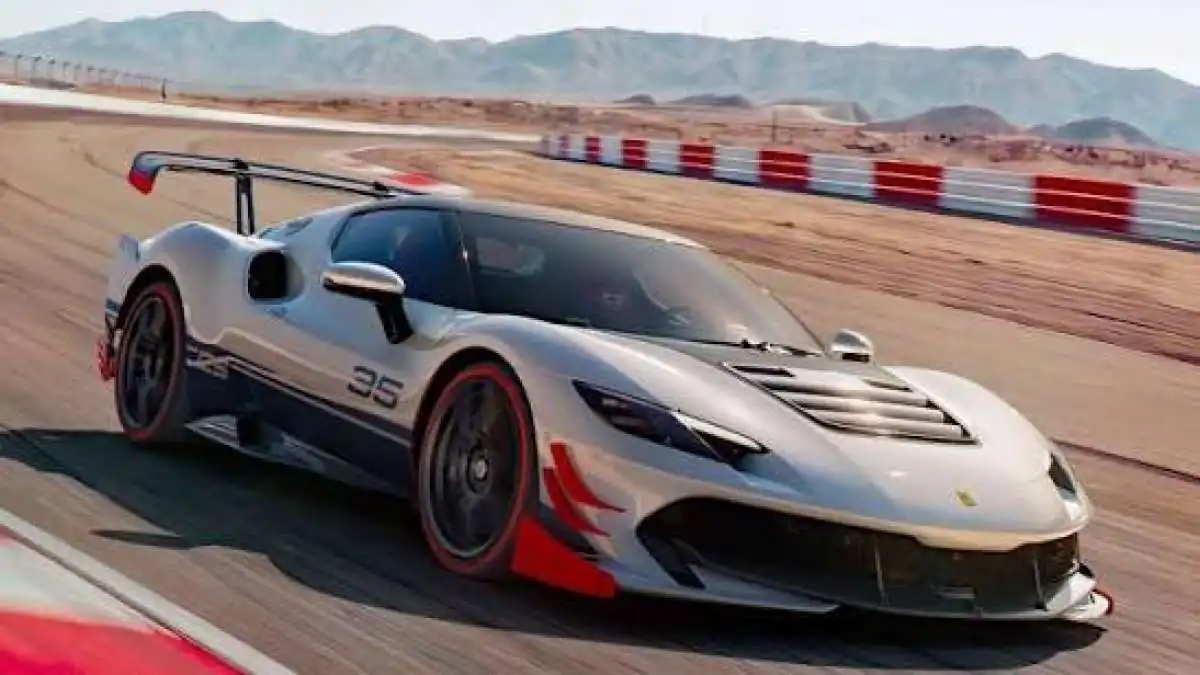
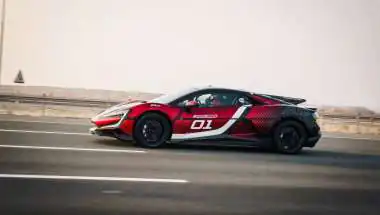
For decades, Ferrari cars were known for their speed, powerful engines, and impressive track performance. The Italian brand has now represented this image in a novel form. Ferrari has released the 296 Challenge Stradale, which, despite being based on a racing car, is street-legal. It has been built especially for people wishing to experience high speed both on streets and tracks.
This latest model from the supercars manufacturer lacks hybrid powertrain completely. Instead, it has a 3.0-liter twin-turbo V6 engine that delivers 670 hp and 740 Nm of torque. The vehicle weighs 140 kg less than Ferrari's 296 GTB. Its aerodynamic package, suspension system, and brakes have been also improved. Moreover, Ferrari's 296 Challenge Evo race car is under development and might make its debut in Formula One in 2027 season.
The 296 Challenge Stradale is based on Ferrari's 296 Challenge race car. The company has also reused the Challenge Stradale name, which was previously used with the Ferrari 360 CS in 2003.
However, it's not a full-fledged race car. It's designed for road driving and track performance. The primary purpose of these design and technical changes is to make the car more stable and controllable at high speeds.
The Ferrari 296 Challenge Stradale features a 3.0-liter twin-turbo V6 engine. The company has removed the hybrid system. This engine generates a maximum power of 670 hp and a torque of 740 Nm. It is paired with an 8-speed dual-clutch gearbox. The removal of the hybrid system and other changes have also reduced the car's weight. According to the company, it weighs 140 kg less than the 296 GTB. Its dry weight is approximately 1,330 kg.
This new Ferrari supercar is also quite powerful in terms of speed. According to the company, the Ferrari 296 Challenge Stradale can accelerate from 0 to 100 km/h in just 2.8 seconds. Its top speed exceeds 300 km/h. The combination of light weight and a powerful V6 engine helps deliver rapid acceleration. The 8-speed dual-clutch gearbox is also designed for quick gear shifting.
Special attention has been paid to improving the aerodynamics of this supercar. According to Ferrari, at a speed of 250 km/h, the car generates 617 kg of downforce. This figure is 72 percent more than the 296 GTB. Downforce means that at high speeds, air pressure presses the car more firmly against the road. This helps improve grip and stability, especially on sharp turns. This change can be crucial when driving at high speeds on the track.
Ferrari has not only focused on the engine and aerodynamics of the 296 Challenge Stradale. Its suspension and braking system have also been updated. It features carbon-ceramic brakes, which help control the car at high speeds and improve braking performance. Additionally, the car features special tires. These changes are intended to improve the car's grip, control, and driving performance on the track.
The Ferrari 296 Challenge Stradale's cabin has also been designed with track performance in mind. Carbon fiber parts have been used in the interior to reduce weight. Non-essential trim has been minimized. This is said to be aimed at keeping the car lightweight and providing the driver with a better driving experience on the track.
The company has also mentioned the 296 Challenge Evo race car, which is expected to make its racing debut in the 2027 season. The Evo is expected to have an increased power output of 700 hp and will also feature an improved aero package. This means the car is being designed specifically for improved racing performance.
Furthermore, the Ferrari 296 Challenge Stradale's most significant feature is that it incorporates race car-inspired technology into a road-going supercar. The 670hp V6 engine, reduced weight, 617kg of downforce, and updated brake and suspension systems, while removing the hybrid system, make this a track-focused car. The 296 Challenge Evo's racing debut in 2027 will also highlight Ferrari's new racing series.