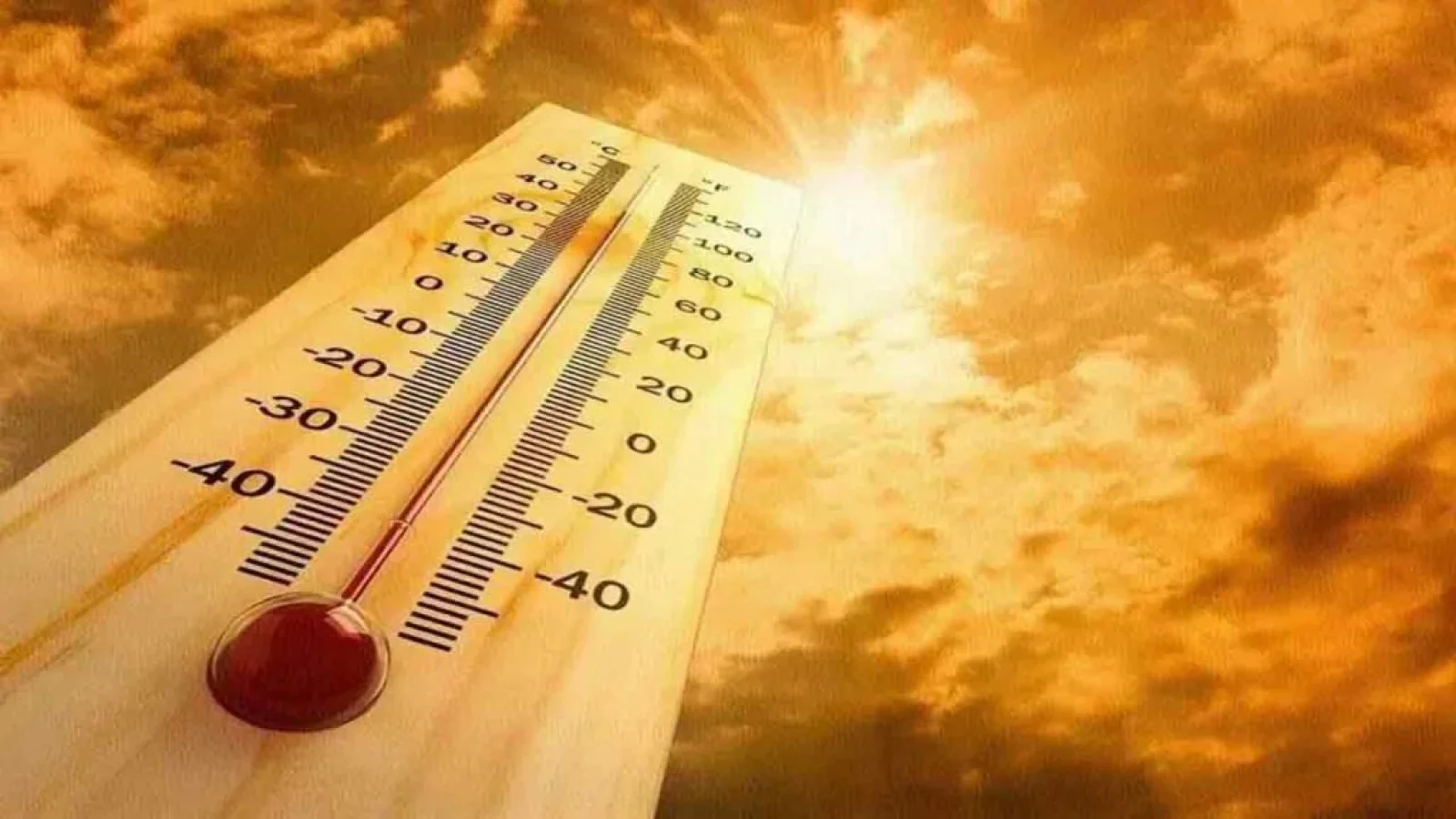
The world is expected to experience one of its hottest years this year, as El Niño is expected to return in July. Temperatures are rising in the country, and according to the India Meteorological Department (IMD), this year’s heat in India is expected to be above normal, and heatwaves are expected to set in as early as March.
This year, the heat has set in very early in India. Temperatures have touched 35 to 38 degrees Celsius in Rajasthan, Gujarat, Maharashtra, and Odisha. In Akola in Maharashtra, the temperature touched 38.5 degrees Celsius.
According to the Meteorological Department, daytime temperatures in many areas of northwest India may be 4-6 degrees above normal this week. Parts of Gujarat and Andhra Pradesh may experience an unusually high number of heatwave days in March.
India is expected to experience more heatwave days than normal in March, May, and April this year. The worst hit will be eastern Uttar Pradesh, Bihar, Jharkhand, Gangetic West Bengal, Odisha, Chhattisgarh, Telangana, Rayalaseema, Andhra Pradesh, Gujarat, and Rajasthan. Weather experts say these areas are already prone to heatwaves.
This year, India has seen the fifth-hottest February since 1901, after 2025, 2016, 2023, and 2006. The average monthly temperature for February was 21.7 degrees Celsius, about one degree above normal. There were no cold waves or cold days anywhere this month. Rainfall has been very low in the last two months, with the country as a whole receiving 60 percent less rainfall this year.
IMD chief Dr. Mrityunjay Mohapatra said that February's rainfall was the lowest since 2001 and the third lowest since 1901. Nine western disturbances occurred this month, compared to the usual 5-6. However, most of these were weak, lacked significant interaction with easterly winds, and produced very little rainfall, further exacerbating the shortage.
After February 15th, day and night temperatures increased significantly, especially in some areas of Gujarat, Rajasthan, and coastal Karnataka, where temperatures were 5-8 degrees above normal, hovering between 30-37 degrees.
El Niño is a seasonal phenomenon characterized by abnormally warm sea surface waters in the equatorial Pacific Ocean, typically occurring every 2-7 years.
El Niño is about to return. In its latest update released on Tuesday, the World Meteorological Organization (WMO) stated that the weak La Niña is now ending and transitioning to an ENSO-neutral state, and could progress to an El Niño state later in the year. Neutral conditions are likely to persist through May and June, but a transition to an El Niño state is most likely after July.
El Niño is a widespread increase in sea surface temperatures in the central and equatorial Pacific Ocean, which affects wind and rainfall patterns. In India, this leads to below-normal monsoon rainfall and above-normal temperatures.
According to WMO forecasts, there is a 60 percent chance of neutral conditions in May and July, while the probability of an El Niño state is gradually increasing to 40 percent. Global land surface temperatures are predicted to be above normal for March to May 2026.
WMO Secretary-General Celeste Saulo said the 2023-24 El Niño was one of the five strongest on record, and contributed to record-breaking global temperatures in 2024. "We will continue to monitor the situation very closely over the coming months to ensure appropriate decisions are made," she said.