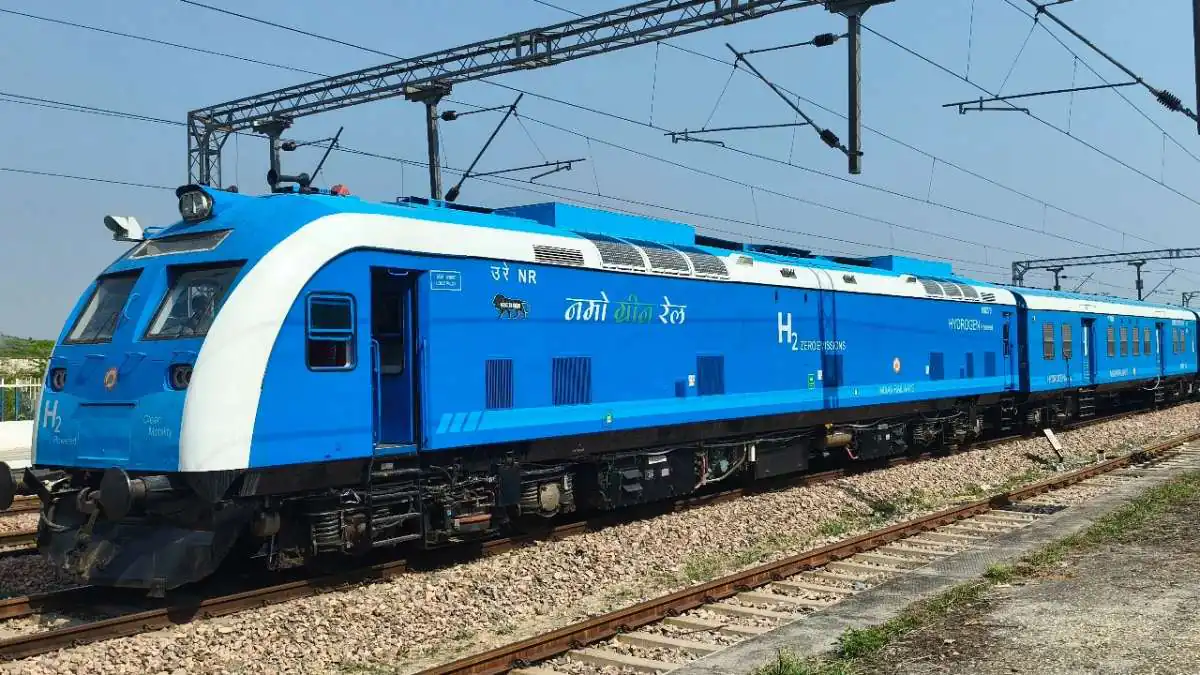
The Railways have made significant progress towards sustainable means of transport by introducing the first hydrogen fuel cell train in India. The train will shortly be put into operation on the Jind-Sonipat track in Haryana. This ten-coach train works on 1200-kilowatt hydrogen energy.
Its maximum speed is 75 kilometers per hour. This proves that India belongs to the few countries that apply hydrogen energy in railways. The whole world recognizes hydrogen technology as the future of sustainable transport.
This train is different from the other diesel-electric trains. It operates on hydrogen fuel cell technology, whereby electricity is produced through a reaction between hydrogen and oxygen. Its emission is water vapor. This means the train will be pollution-free.
Very few countries in the world are currently operating or testing hydrogen-based rail systems. Following countries like Germany, Japan, China, and the United States, India has now moved forward in this direction. Experts believe that if this project is successful, hydrogen trains could replace diesel engines on many non-electrified routes of Indian Railways in the coming years.
The Railways has developed this project as a strategy for clean energy and carbon emission reduction. It is a major part of the campaign to make trains energy-efficient and environmentally friendly. The Jind-Sonipat section has been designated as a pilot route for this project. An indigenous hydrogen storage and refueling facility has been developed in Jind.
The Petroleum and Explosives Safety Organization has also granted permission for the storage and distribution of hydrogen gas here. The Railways has also installed the necessary technical equipment. Safety preparations have been made at various levels.
Hydrogen leak and fire detection sensors have been installed and will be regularly inspected. Additional compressor units are being installed to handle emergencies. In the initial phase, trained technical staff will accompany the train to ensure operational safety.
The Railway's Research Designs and Standards Organization (RDSO) has approved the train and hydrogen plant. Safety tests have also been completed by the Commissioner of Railway Safety. A dedicated maintenance facility is being developed in Shakurbasti, where safety standards and operating procedures will be strictly adhered to.
The train utilizes distributed power rolling stock technology. This means that all power will be distributed throughout the train, rather than concentrated in a single engine. This will increase energy efficiency and make operations more balanced. This project signals that India is rapidly adopting future green technologies.











































.jpg)