Air India has sent its final offer for compensation to the relatives of the victims who lost their lives in the plane crash of AI-171 on June 12, 2025. In a letter to one of the relatives, the airline said, "The compensation, as per legal calculations, is less than the ₹2.5 million, which has already been awarded, but it is willing to give an additional ₹1 million as a 'full and final settlement'."
The letter, titled "Without Prejudice," contains a calculation of the compensation and a Release, Discharge, and Indemnity (RDI) form. The family will have to sign the form if they accept the offer. Another important point that has been clarified is that the family can seek legal advice before making a decision.
Signing the RDI form means the family will not be able to make any future claims related to the accident. This waiver will not be limited to Air India alone.
The waiver includes names like aircraft manufacturer Boeing, the Government of India, the Ministry of Civil Aviation, the Directorate General of Civil Aviation (DGCA), the Airports Authority of India, General Electric Company, GE Aerospace, Safran SA, Safran Electronics & Defense, Avionics USA LLC, and Honeywell International.
These companies' parent companies, subsidiaries, officers, employees, and insurance companies are also included. In addition, it is mentioned in the document that the agreement will be valid even if new facts come to light in the future.
The compensation was fixed under the Carriage by Air Act 1972, which includes the Montreal Convention. But this law does not provide the formula for the determination of the compensation.
In its defense, the airline quoted the Supreme Court ruling in cases involving Triveni Kodkeni and Air India, National Insurance Co. Ltd., and Pranay Sethi, and claimed that the calculations were done in line with these principles. The amount was worked out based on the documents presented by the family.
The company states that the total compensation (including loss of baggage) is less than ₹2.5 million, which has already been paid as interim relief. Despite this, an additional ₹1 million has been proposed.
According to the document, the settlement will be governed by Indian law, and disputes related to the settlement will be heard only in the Ahmedabad courts. If any other family member files a claim in the future, the person who entered into the settlement will be responsible for all losses, including legal expenses, and the companies involved will be required to pay all damages. Even if any clause of the agreement is found invalid, the remaining terms will remain in effect.
Air India said in a statement that it had previously provided interim relief of ₹2.5 million and is in the process of disbursing an ex-gratia of ₹1 crore from the AI-171 Memorial and Welfare Trust.
According to the airline, final compensation is awarded on a "full and final" basis, in accordance with industry standards, to bring the matter to a close. Individual families are awarded different amounts based on their circumstances. The company states that this condition is necessary to prevent future direct or indirect claims against Air India or other entities.
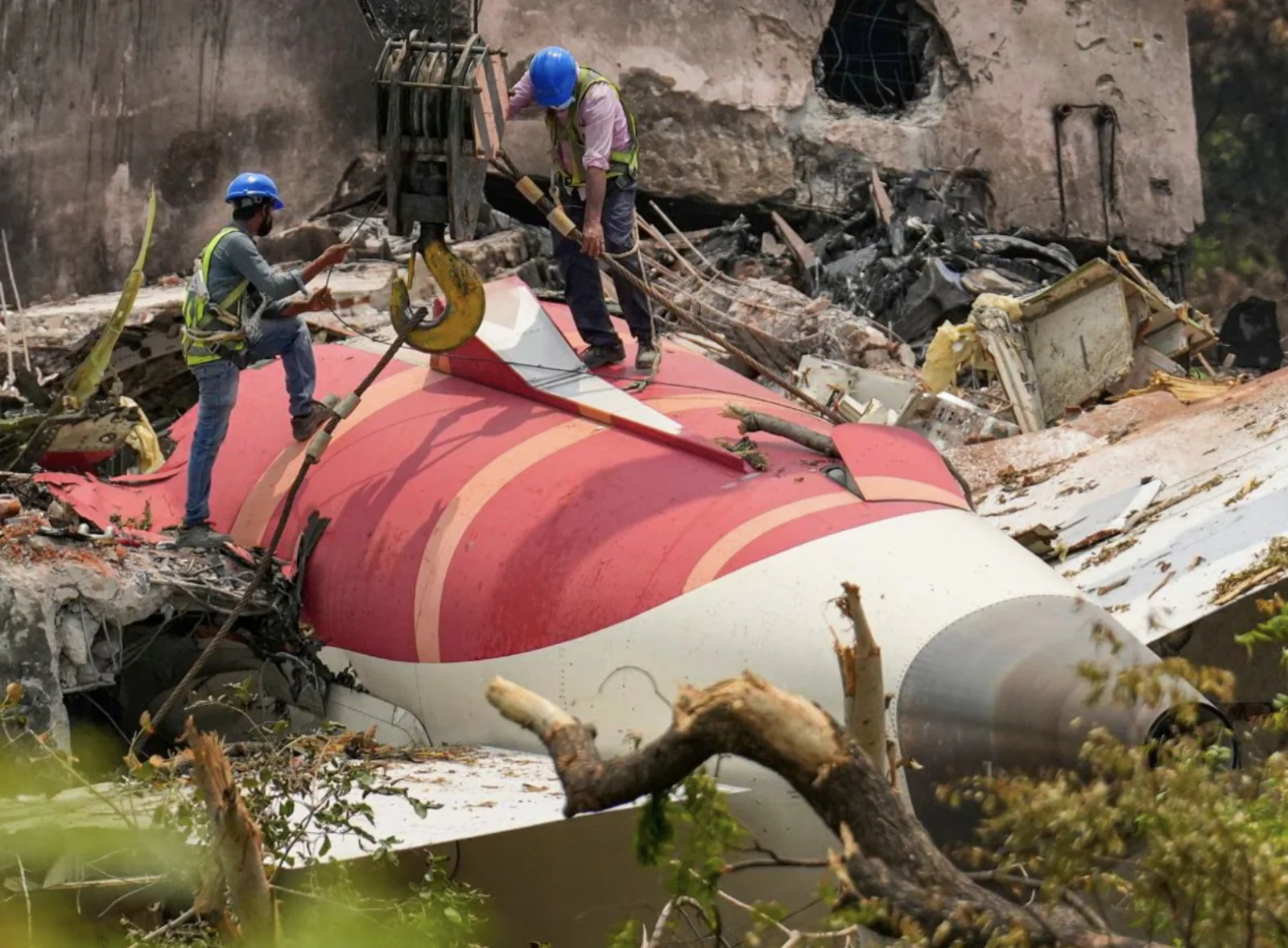
On June 12, 2025, AI-171, en route to London's Gatwick Airport, crashed. All 241 people on board and 19 on the ground died in the accident. Only one passenger survived.
According to the preliminary report of the Air Accident Investigation Bureau (AAIB), the fuel control switches suddenly went to the 'cut-off' position just seconds after takeoff, cutting off fuel to the engines and causing a complete loss of power. The AAIB has stated that a final report and safety recommendations will be issued in accordance with international regulations after the investigation is complete.














































.jpg)