










































.jpg)










Supreme Court Asks States to Respond to Plea Seeking Stay on Anti-Conversion Laws
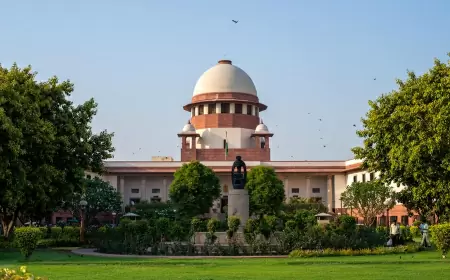
The Supreme Court has sought responses from the Central Government and 12 states, including Rajasthan, on a public interest litigation filed by the National Council of Churches in India (NCCI). The petition challenges the validity of the anti-conversion laws in the respective states and seeks a stay on their implementation. A bench comprising Chief Justice Surya Kant and Justice Joymalya Bagchi has sought responses within four weeks.



The Supreme Court on Monday sought responses from the Central Government and 12 states, including Rajasthan and Arunachal Pradesh, on a new public interest litigation filed by the National Council of Churches in India (NCCI). The petition questions the validity of anti-conversion laws in these states and seeks a stay on their implementation.
The bench formed by Chief Justice Surya Kant and Justice Joymalya Bagchi took note of the arguments of the NCCI and directed the Central and 12 state governments to file their responses in four weeks. The Chief Justice ordered the new petition to be attached to the pending petitions and stated that the petitions would be heard by a three-judge bench.
Solicitor General Tushar Mehta, representing the Central Government, stated that similar petitions challenging state laws are pending. He said, "Our response is ready and will be filed soon." NCCI lawyer Meenakshi Arora said that Odisha and Rajasthan have also enacted their own laws, which were not challenged in the previous petitions. There are amendments to other laws as well that have not been challenged. Notices should be served on all standing counsels.