Tandon took to social media to highlight the historical connection between sustainable fashion, local livelihoods, and national identity, accompanying her message with photographs featuring handwoven sarees crafted by regional master weavers.
In her statement, Tandon referenced the roots of self-reliance in Indian history, emphasizing that backing local handloom ecosystems is key to preserving living cultural traditions.
"Swadeshi was built on the idea of standing by our own people, and that starts with our master weavers," Tandon stated. "Wearing local today with gratitude for the hands that keep our culture alive."
Her campaign joins a growing movement within the Indian entertainment industry advocating for sustainable, locally sourced textiles—such as Chanderi, Kanjeevaram, Jamdani, and Ikat—to be integrated into mainstream fashion and red-carpet wardrobes.
Industry Voices Rally Behind Handloom Artisans
Other key public figures joined the national campaign, using their platforms to urge consumers to prioritize Indian-made handloom products over mass-produced synthetic imports.
Actor Shriya Saran drew attention to the labor-intensive nature of handloom production and its critical role in sustaining rural household economies:
"Behind every thread is a family, a tradition, and days of hard work. Our weavers keep our history alive in the most beautiful way," Saran noted while encouraging public engagement through community outreach hashtags.
Veteran television actor Apara Mehta reflected on the intergenerational transmission of textile appreciation, sharing personal insights into how traditional garments form an integral part of regional heritage:
"Our country has such a rich heritage of textiles and I have been very fortunate that thanks to my mother, I was introduced to our beautiful handlooms right from my birth," Mehta remarked. "I would like to tell everyone to please embrace our handlooms and local textiles and continue our rich heritage of textiles."
Historical Context and Economic Significance
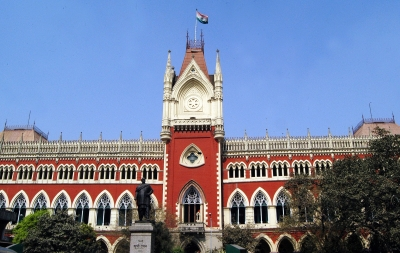
National Handloom Day was formally established to commemorate the Swadeshi Movement launched on August 7, 1905, at the Town Hall in Calcutta (now Kolkata). The historical movement encouraged economic self-reliance by boycotting imported goods in favor of domestic production and indigenous crafts.
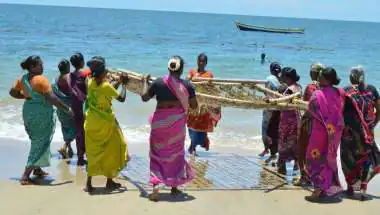
Today, the handloom sector represents one of the largest unorganized economic sectors in India, second only to agriculture. According to official ministry data, the industry provides direct and indirect employment to over 35 lakh weavers and allied workers nationwide, with women constituting more than 70% of the total workforce.
While modern mechanization presents ongoing competitive pressures, public advocacy campaigns led by cultural figures continue to bolster consumer demand, driving ethical consumption and sustaining rural craft livelihoods across the country.











































.jpg)