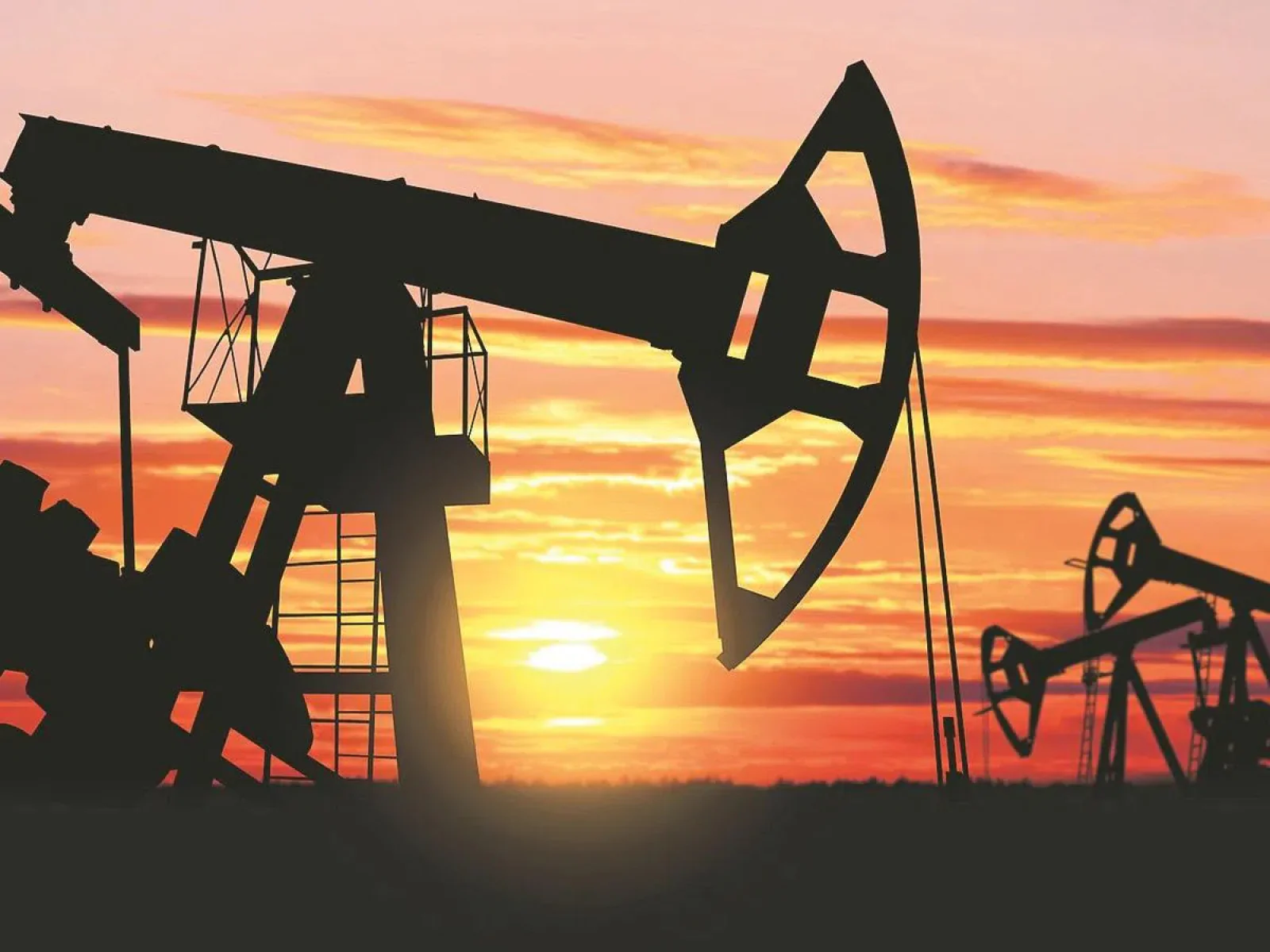
The ongoing war in Iran is now directly affecting the common man's daily life. Crude oil prices have surpassed $100 per barrel for the first time in three and a half years. This increase is due to disruptions in oil production and shipping.
When markets resumed trading on Sunday, the price of Brent crude, considered the international benchmark, reached $107.97 per barrel. This is a 16.5 percent increase from Friday. Meanwhile, the price of US-produced West Texas Intermediate crude oil also surpassed $106.22 per barrel, up 16.9 percent from Friday. These prices are likely to fluctuate as trading continues in the market.
This surge was seen just last week, when US crude prices rose 36 percent, and Brent crude prices rose 28 percent. The war is now in its second week and has also affected areas crucial for the production and transportation of oil and gas from the Persian Gulf.
According to an independent research firm, approximately 15 million barrels of crude oil are shipped worldwide each day. A large portion of this volume passes through the Strait of Hormuz. This strait is located near Iran and transports oil and gas from countries such as Saudi Arabia, Kuwait, Iraq, Qatar, Bahrain, the United Arab Emirates, and Iran. But tankers are now reluctant to travel this route due to the threat of missile and drone attacks from Iran.
Countries like Iraq, Kuwait, and the United Arab Emirates have reduced their oil production due to declining oil exports and filling up storage tanks. Furthermore, Iran, Israel, and the United States have also attacked oil and gas facilities since the war began, further fueling concerns about global oil supplies.
US crude futures last topped $100 per barrel on June 30, 2022, when they reached $105.76. Brent crude was at $104 per barrel on July 29, 2022.
This global rise in oil prices since the Israeli and US attacks on Iran on March 1 has become a cause for concern in financial markets. This has raised fears that rising energy prices will further fuel inflation and reduce the spending power of American consumers, the backbone of the economy.
On Sunday, the price of a gallon (about 3.78 liters) of regular gasoline in the US reached $3.45, an increase of about 47 cents from a week ago. Diesel prices reached about $4.6 per gallon, an increase of 83 cents from last week. The US Energy Secretary has assured that gasoline prices will soon fall below $3 per gallon and that the problem is a matter of weeks, not months.
Some experts and investors believe that if oil prices remain above $100 per barrel, it could prove significantly damaging to the global economy.
Iranian officials say four people were killed in Israeli attacks on oil warehouses and a terminal in Tehran early Sunday. The Israeli military says Iran was using these warehouses as fuel to launch missiles. The Speaker of Iran's Parliament has warned that the war will further impact the oil industry.
Iran sells approximately 1.6 million barrels of oil every day, most of which is purchased by China. If oil supplies from Iran are cut off, China will have to buy oil from other countries, which could further increase energy prices.
Natural gas prices have also risen during the war, although not as much as oil. Late Sunday night, it was selling at $3.33 per 1,000 cubic feet, a 4.6 percent increase from last week. Meanwhile, US stock markets have also seen a decline.


















































.jpg)